

insulated terminals
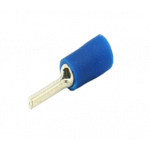
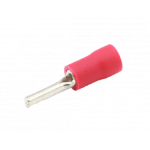
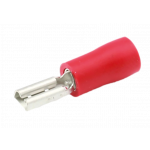
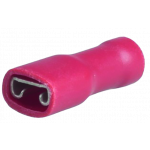
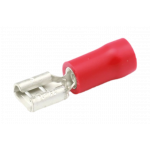
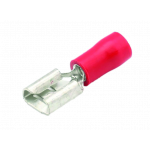
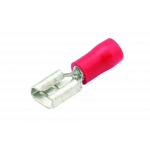
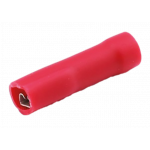
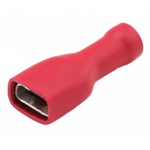
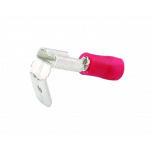
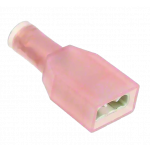
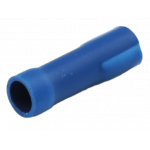
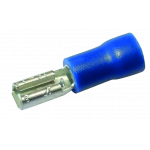
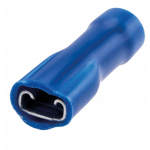
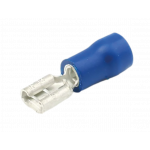
In the workshop of an HGV garage or trailer manufacturer, clarity and structure are not optional but essential. Insulated cable lugs are a fundamental part of that structure. They create a mechanically and electrically reliable termination between cable ends and connection points, while the insulating sleeve protects the technician from accidental contact with live conductors. For anyone working daily on the electrical systems of tractor units, semi-trailers and bodywork, this product type is indispensable.
The most recognisable feature of the insulated cable lug is its colour coding. Red indicates cross-sections from 0.5 to 1.5 mm², blue covers 1.5 to 2.5 mm², and yellow applies to 2.5 to 6.0 mm². This classification is defined in DIN 46228, the standard that specifies dimensions and design requirements for insulated connecting elements in cable assembly technology. By consistently applying the colour coded cable lug system throughout trailer construction or HGV wiring, the risk of errors during assembly or repair is significantly reduced. A technician working under time pressure can identify the correct lug by colour alone, without needing to read every printed marking.
Within the insulated crimp lug HGV category, several variants are available, each suited to a specific application. The ring cable lug is the most common type in truck and trailer environments. The closed ring wraps fully around a bolt or screw, keeping the connection secure even under vibration and mechanical stress. This matters for chassis wiring, earth connections on the trailer frame, and terminations near axles and suspension points. Ring lugs are available in multiple ring diameters to match the bolt sizes used in standard vehicle construction.
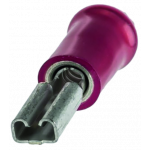
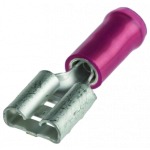
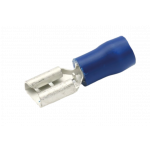
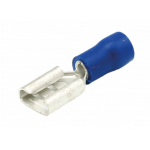
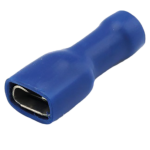
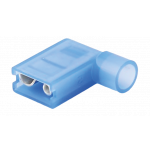
Flat connectors and receptacle housings form another widely used group. They are designed for quick-connect applications where a tab is inserted into a sleeve contact. Many versions include a strain relief collar at the point where the cable enters the crimp barrel. This is mechanically the most vulnerable part of the connection in a vibrating environment such as a moving vehicle, and the collar prevents the conductor from fracturing through repeated flexing.
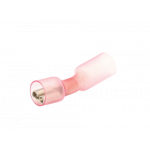
A specific variant increasingly used in external and wet zones of trailers and semi-trailers is the cable lug with integrated heat shrink tubing. After crimping, heat is applied to activate the shrink tube and an internal adhesive layer, forming a watertight seal around the connection. This is particularly relevant for terminations exposed to spray water, pressure washing or sustained moisture, such as rear light clusters, side marker lighting and earth points on the trailer underframe.
Proper crimping requires the correct tool. The insulating sleeve is designed to match a specific crimp profile. A tool set to the wrong cross-section or profile can damage the sleeve or produce a crimp that appears correct visually but fails mechanically or electrically under load. In a professional HGV workshop, each cable size is matched to its corresponding crimping tool, and completed connections are visually inspected for the correct jaw impression.
For trailer builders, body builders and coachwork manufacturers, maintaining adequate stock of insulated cable lugs across all standard sizes is a practical necessity. Red and blue ring lugs are consumed in the highest volume during new trailer or body construction, followed by flat connector sleeves for control and sensor wiring. Consistent use of the red, blue and yellow colour coding system in line with DIN 46228 results in an installation that is reliable, traceable and straightforward for any qualified technician to diagnose and service.
In the daily practice of the truck and trailer sector, insulated cable lugs are used to terminate rear light assemblies, side marker lights, distribution boards on semi-trailers, chassis earth points and wiring for ancillary equipment such as tail lifts and container locks. The colour coded insulated cable lug truck format keeps the work organised and reduces the chance of mix-ups during repair or modification. Dekoff supplies these termination components to workshops, manufacturers and distributors who build and maintain reliable commercial vehicles every day.