

Grommet









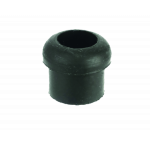
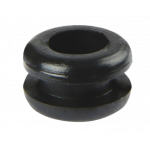
In any truck workshop and across the full scope of trailer construction, cables and wiring harnesses pass through metal panels, chassis sections, bulkheads and bodywork at dozens of points throughout a vehicle. Each of those penetration points represents a potential risk: the sharp edge of a drilled or punched hole can damage cable insulation, particularly when vibration and movement cause the cable to repeatedly contact that edge. A cable grommet addresses this by forming a soft, elastic barrier between the metal edge and the cable jacket.
The grommet is fitted into a pre-drilled or punched hole and clamps to the edge of the panel, fully encasing the rim so that the cable no longer comes into direct contact with the base material of the plate. In the context of HGV trailer and semi-trailer construction, this is a critical detail. Vehicles in road transport are subject to constant mechanical vibration from road surfaces, cargo loads and drivetrain forces. Without proper protection at each cable penetration, insulation wears progressively, eventually resulting in short circuits, voltage failures or fire risk within the electrical system of the trailer or semi-trailer.
Grommets are available in a wide range of dimensions to suit the variety of cable diameters encountered in the truck and trailer sector. Small grommets with a channel diameter of 4 mm are used for individual thin control cables or signal lines. Mid-range versions with internal diameters of 8 to 11 mm cover standard vehicle cables and lighter wiring harnesses. Larger formats, with internal diameters of 12.5 mm and above or outer diameters up to 38 mm, are intended for situations where multiple cables or substantial harnesses pass through a single opening simultaneously. This is a common requirement in trailer bodywork, for example where the main cable trunking connects to the side or rear wall panels of a semi-trailer.
The wall thickness of the grommet, typically 1.6 mm across most sizes, determines the level of mechanical protection it provides to the cable jacket. A consistent wall thickness around the full circumference of the hole is essential to prevent the cable from contacting the panel at any weak point. Material selection also plays a role: the grommet must be elastic enough to seat securely in the hole and to accommodate cable movement without constricting, yet durable enough to withstand prolonged exposure to oil, grease and cleaning agents commonly found in a truck workshop environment.
In day-to-day trailer construction and bodywork manufacturing, grommets are applied in volume. During the assembly of a new trailer or semi-trailer, dozens to hundreds of penetration points are fitted with grommets before wiring is routed. This is a standard step in the production process, because remedial work on a finished vehicle is time-consuming and costly. Bodywork manufacturers and coachbuilders therefore maintain a fixed stock of multiple grommet sizes, ensuring that every penetration in the design can be fitted with the correct grommet without modification to the hole.
In the truck workshop setting, during repair or conversion of existing vehicles, grommets are an equally standard item. When additional wiring is added, for instance for an extended indicator circuit, an auxiliary lighting run or a sensor on a trailer, a new hole is drilled and immediately fitted with the appropriate grommet. Technicians who omit this step regularly find that new cables sustain damage within a relatively short time, resulting in electrical faults that are difficult to trace.
For the truck and trailer sector, cable grommets are therefore not a minor accessory but a component of properly executed electrical installation work. They ensure that the wiring system of a semi-trailer, trailer or truck can withstand the mechanical stresses inherent in road transport, contributing to the reliability and service life of the entire electrical system.