

Car lights
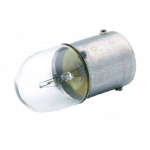
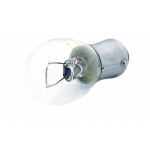
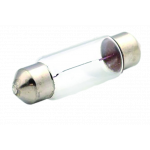
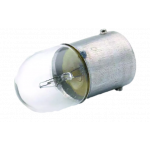
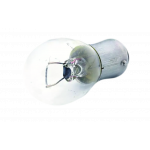
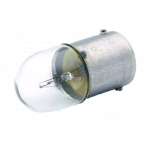
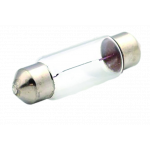
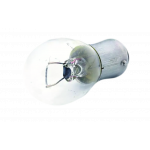
In the truck workshop and across the trailer industry, a wide range of bulb types is used daily, each serving a specific function within the electrical system of a vehicle or trailer. From headlights to licence plate lighting and from indicators to interior illumination, selecting the correct bulb type for each position determines the safety, functionality and service life of the lighting installation.
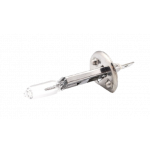
The H4 headlamp bulb is one of the most widely used types in the European vehicle industry. Its 3-pin connection allows both the dipped beam and the main beam function to be combined within a single bulb. In trailer construction and on working vehicles, the H4 fitting is frequently used because existing housings are directly compatible and replacement can be carried out quickly without modifications to the wiring. The H1 bulb complements this in systems where dipped and main beam are handled by separate units. With a power rating of 55W and a clear, uncoated glass envelope, the H1 delivers maximum light output, making it suitable for front and fog lamps on trailers and light commercial vehicles.
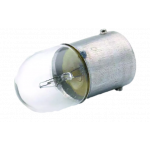
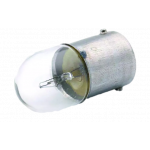
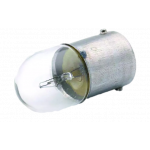
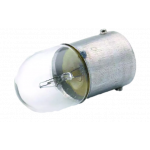
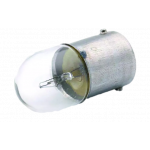
For signal lighting on semi-trailers and trailers, bayonet base bulbs are available in various configurations. The BA15S fitting with a single contact point is widely used for stop lights, indicators and reversing lights on trailers. Available in both 12V and 24V versions, this fitting is an industry standard that connects to the electrical system of both light and heavy vehicles. The 24V heavy duty longlife version is specifically suited to the demanding conditions found in transport operations, where downtime caused by lamp failures needs to be minimised.
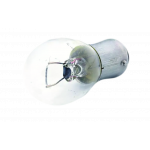
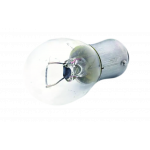
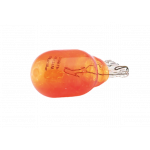
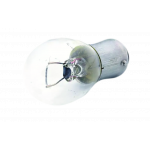
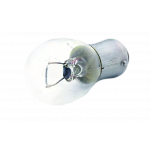
The BAY15D fitting differs by having two contact points at asymmetric heights, providing a polarised connection that prevents incorrect installation. This is practically important on trailers and HGV combinations where position lights and brake lights share the same housing. In 12V form the BAY15D is a standard choice for trailer applications, while the 24V version is used on trucks and heavy trailers. The BAU15S fitting operates on a similar principle with asymmetrically placed pins, but is standardly supplied in amber glass for indicator functions. This is a functional requirement: the correct light colour for direction indicators is legally prescribed and must not be interchanged with clear variants.
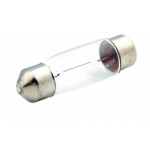
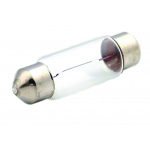
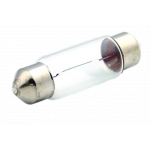
Alongside bayonet bulbs, festoon lamps are a commonly used type in vehicle and trailer applications. The SV8.5-8 fitting is a cylindrical festoon socket used in licence plate lighting and small compartment lamps. Both the 5W and 10W variants are available in clear glass, with the choice depending on the required light intensity at the specific position. In trailer construction, festoon bulbs are used in licence plate holders and light bars mounted across the width of the trailer.
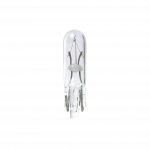
Wedge base bulbs with the W2.1x9.5D fitting are suitable for position lights, side marker lights and dashboard lighting. The wedge base inserts directly into the corresponding socket without additional fasteners, making replacement quick and straightforward. In the truck workshop this is a practical advantage during routine maintenance.
PL-S lamps with a 2G7 fitting and 4-pin configuration are intended for workshop lighting and office spaces. These lamps deliver a colour temperature of 4000K, producing clear and neutral white light that enables accurate colour rendering. They are compatible with electronic ballasts and are used in commercial environments where a good level of visibility is required.
In the practical context of the truck workshop, trailer construction and maintenance of semi-trailers, it is important to select the correct bulb type for each housing position based on fitting, voltage, wattage and light colour. The combination of 12V and 24V systems within a single vehicle combination requires attention during replacement: a 12V bulb in a 24V circuit will fail prematurely, while a 24V bulb in a 12V system will produce insufficient light output. By using the correct type at each position, faults are prevented and the lighting installation continues to function reliably within the requirements set by road traffic regulations.