

Battery cable
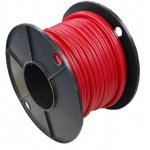
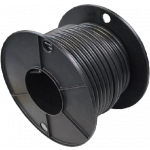
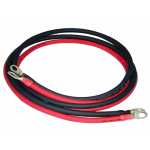
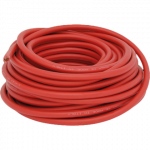
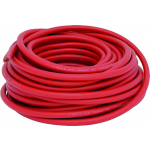
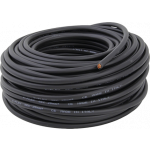
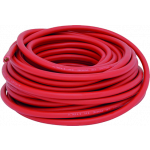
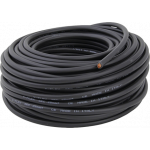
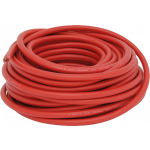
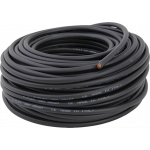
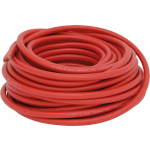
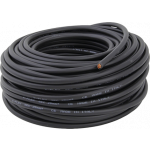
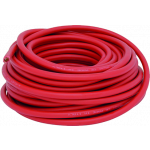
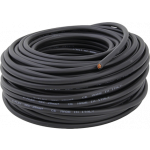
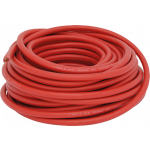
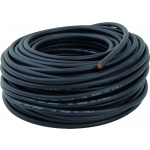
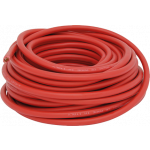
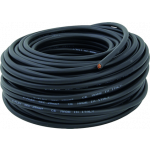
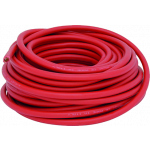
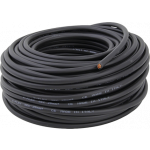
Reliable power transfer between the battery, starter motor and alternator is a fundamental requirement in any heavy vehicle. In the truck and trailer sector, installers and trailer builders work daily with battery cables that must withstand vibration, temperature fluctuations and the mechanical stresses inherent to heavy transport. Selecting the right battery cable truck 24V starts with the cross-section: 10mm² covers a broad range of standard starting applications in 24V systems, while 16mm² becomes the appropriate choice when higher current loads or longer cable runs are involved.
In the day-to-day environment of a truck workshop or trailer manufacturer, these cables are used as positive and negative leads within the main power circuit of the vehicle. The red version serves as the standard positive conductor, the black as the negative. This colour coding is not merely conventional: it prevents polarity errors during installation and simplifies troubleshooting at a later stage. When a technician installs a starter cable HGV or replaces existing wiring, immediate visual identification of polarity is a practical necessity in any busy workshop setting.
The flexible battery cable available in this category is constructed with a finely stranded copper conductor conforming to IEC 60228 class 5. This means the conductor consists of a large number of fine wires, providing significantly better flexibility compared to solid or coarsely stranded conductors. In practice, this makes a considerable difference when routing cables along the chassis, through cable ducts or across fabricated cable entry points where tight bends are unavoidable. A flexible battery cable is also less susceptible to breakage or fatigue at lower ambient temperatures, which is relevant for vehicles operating in Northern European conditions.
The PVC insulation provides protection against mechanical load, moisture and common industrial fluids such as coolant and hydraulic oil. For applications subject to more demanding environmental conditions, neoprene as a sheath material offers a higher level of protection. Neoprene provides significantly greater resistance to ozone, UV radiation and aggressive chemicals, making it suitable for outdoor installations or positions on the vehicle with direct and continuous exposure to weather, such as the underside of the chassis or areas near exhaust systems.
The twin battery cable is a specific configuration where the positive and negative conductors are supplied as a single unit. This type is particularly used when both leads run in parallel over a longer distance, such as when connecting batteries mounted remotely from the starter motor. The advantage is a neater cable run and a reduced risk of individual conductors being mixed up or damaged separately.
The range in this category is available in various lengths, from 10-metre cuts for occasional use to 100-metre drums and 50-metre reels for workshops with consistent cable consumption. A reel format offers a practical advantage when paying out cable: it unwinds without tangling or twisting, reducing time lost on the workshop floor.
For trailer builders, bodybuilders and workshops specialising in heavy transport, maintaining a structured cable stock is an operational priority. Battery and starter systems in trucks and semi-trailers are inspected at every scheduled service, and cable replacement is regularly part of that process. Working with fixed cross-sections in clearly identifiable colours, available on drum or reel in the workshop itself, shortens turnaround times for both repairs and new builds. Combined with the correct cable lugs, ferrules and protective materials, these battery cables form the foundation of every reliable 24V system in a heavy commercial vehicle.