

Fuel hose
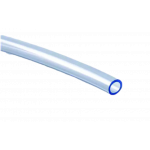
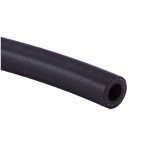
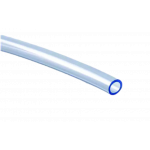
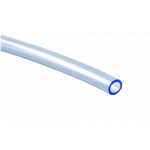
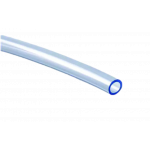
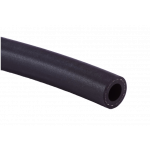
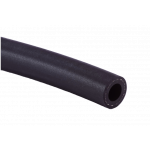

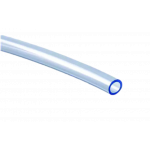
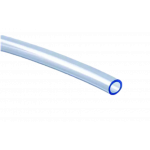
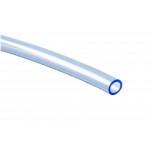
In a professional truck workshop, fuel hose is one of the most frequently used consumable materials. Whether the task involves repairing a leaking fuel line on a tractor unit, routing a new fuel supply in a trailer build, or replacing aged hose during scheduled maintenance, the right hose selection determines the long-term reliability of the installation. Dekoff supplies fuel hoses in both PVC and rubber constructions, covering a range of internal diameters suited to the demands of trailer manufacturing and heavy goods vehicle operations.
PVC fuel hose is widely used in low-pressure systems where flexibility and resistance to hydrocarbons are the primary requirements. These hoses withstand exposure to petrol, diesel and other common fuels. In engine compartments, along chassis runs or within the enclosed body structures of a trailer, space is often limited and routing paths are irregular. PVC handles these conditions well: it can be cut to length, bent without tools and connected to standard hose fittings without difficulty. Wall thickness increases proportionally with internal diameter. Smaller sizes from 3 to 5 mm internal diameter are suited to return lines or lubrication connections, while mid-range sizes from 6 to 9 mm serve as main fuel supply lines in lighter installations. At the upper end of the PVC range, a 12 mm internal diameter with a 2 mm wall offers adequate mechanical resistance to the vibration loads typical of HGV engine environments.
In trailer construction and at specialists working on semi-trailers, fuel hoses appear not only in drivetrain-related systems but also in auxiliary units such as diesel heaters, refrigeration units and other fuel-driven equipment integrated into the vehicle or the trailer body. A refrigerated trailer with its own diesel-powered cooling unit requires a reliable fuel connection between tank, filter and engine. A cab heating unit similarly depends on a sound hose connection between the fuel source and the heater. In these applications, both chemical resistance and flexibility of the hose material are operationally relevant.
Rubber fuel hoses offer a greater wall thickness relative to their internal diameter compared to PVC equivalents, resulting in higher mechanical strength and better resistance to external damage. A rubber hose with a 3 mm wall tolerates contact with sharp edges, brackets or other structural elements better than a thin-walled alternative, and maintains performance at higher ambient temperatures such as those near exhaust systems or engine blocks. The available internal diameters of 6, 8 and 10 mm cover a broad spectrum from filter connections and return lines to main fuel supply in heavier powertrains. The 10 mm internal diameter variant is particularly relevant where high fuel flow rates are required, such as in stationary diesel engines or large-displacement HGV drivetrains.
In the truck workshop, standard-length fuel hose is typically cut to size on the bench or at the point of installation. This allows technicians to fit the exact length required without waste. Whether the connection is a short run between two adjacent components or a longer line routed through conduit or protective sleeving, metre-length stock provides practical flexibility. When combined with protective conduit from the Dekoff range, fuel hose can be shielded from abrasion and vibration-related wear where it runs along the chassis or through structural openings. This is standard practice among trailer builders routing supply lines along the underframe, and among body builders integrating fuel systems into specialist vehicle conversions.