

Fuses
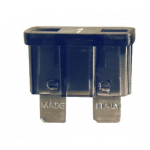
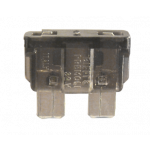
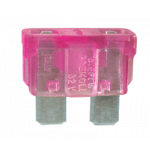
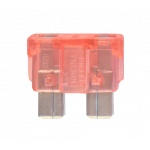
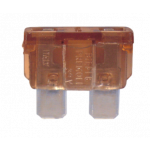
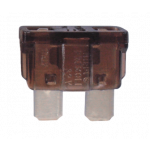
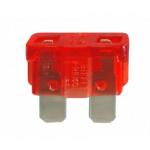
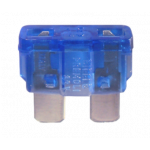
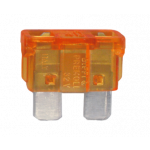
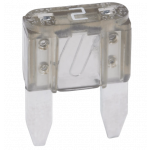
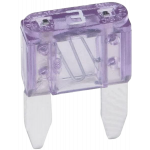
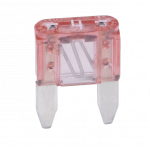
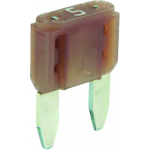
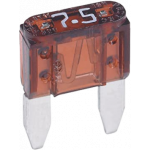
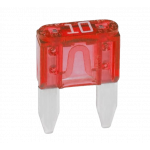
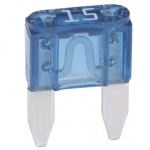
In the electrical installation of a truck or trailer, the fuse performs a critical function. Every circuit, from lighting and brake lights to charging systems and auxiliary drives, is protected by a fuse that interrupts the circuit in the event of overload or short circuit before damage occurs to wiring or components. For professional technicians, trailer builders and bodywork manufacturers, selecting the correct type and amperage for each application is essential. The choice between a standard blade fuse and a resettable type, or between a compact ATO format and a maxi version for heavily loaded circuits, directly determines the reliability and ease of maintenance of the installation.
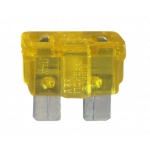
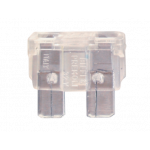
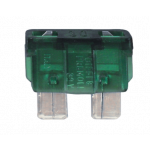
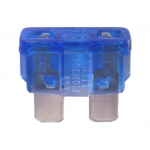
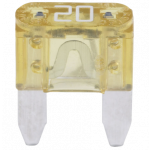
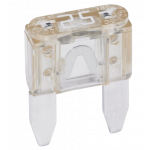
The blade fuse truck is the most widely used type in the vehicle electrics of trucks and trailers. In the format conforming to ISO 8820 and DIN 72581, blade fuses are used in fuse boxes, distribution blocks and relay panels on both the towing vehicle and the trailer. The colour coding is internationally standardised: each amperage value has a fixed colour, allowing a workshop technician to identify the correct rating at a glance without needing to read the print. A red 10A fuse, a blue 15A, a yellow 20A or a white 25A are familiar examples applied daily in the circuits of trucks and trailers. When used in 24V electrical systems, as standard in heavy commercial vehicles, it is important that the fuse is rated for the higher voltage present in these systems.
Alongside the standard blade fuse, a version with an automatic reset mechanism is also available. This circuit breaker blade fuse fits physically into the same holders as a standard ATO or ATC fuse, but trips on overload and can be manually reset after the cause has been resolved without replacing the fuse. This type is used in the truck and trailer sector on circuits subject to repeated overload or temporary peak currents, such as circuits for electric landing legs, tail lifts or auxiliary drives. Replacement is eliminated, reducing vehicle or installation downtime. For lower current circuits such as 5A, 7.5A or 10A, these auto-reset types are used in lighter auxiliary circuits and sensor controls, while higher ratings of 15A, 20A or 25A serve more powerful loads.
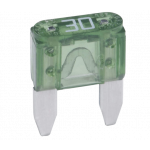
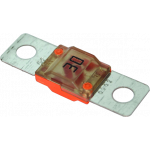
For main circuits and heavily loaded connections in trucks and trailers, the maxi format is used. The maxi fuse 24V HGV is considerably larger than a standard ATO fuse and offers a rating range from 20A upwards to 80A or more. A maxi fuse 24V of 30A is used, for example, for heavy distribution circuits or multiple lighting systems, while versions of 60A, 70A or 80A are applied in large power inverters, electric heating systems or high-current distribution blocks. The colour coding also follows the international standard in the maxi format: green for 30A, orange for 40A, red for 50A, blue for 60A, brown for 70A and white for 80A. The maxi fuse fits all standard maxi fuse holders used in truck and trailer construction.
The midi fuse trailer occupies a position between the standard ATO format and the maxi version. This type is used in medium-duty circuits of trailers and semi-trailers where space for a maxi holder is limited but the current rating exceeds what a standard blade fuse can handle. Trailer builders and bodywork manufacturers choose the midi format for specific distribution points in the electrical architecture of a trailer, such as connection points for lighting, sensor systems or control circuits.
The mega fuse truck is used for the most demanding protection tasks in the electrical system of a heavy commercial vehicle. This format has an even higher current capacity than the maxi version and is typically positioned close to the battery or the main distribution point of the vehicle's electrical system. In trucks with extensive electrical installations, such as vehicles with multiple refrigeration units, hydraulic systems or large charging installations, the mega fuse is the first line of protection in the main circuit.
In the daily practice of a truck workshop or trailer builder, a well-stocked fuse assortment means technicians can act quickly during fault diagnosis or new installations. Whether replacing a faulty blade fuse truck in a fuse panel, fitting a maxi fuse 24V HGV into a new distribution block on a trailer, or selecting the correct midi or mega format for a specific circuit, the right fuse must be immediately available in the workshop. Dekoff supplies a complete range of fuses for trucks and trailers, tailored to the requirements of professional installers and trailer builders working on both new builds and the maintenance of vehicles and semi-trailers.