

Cable Ties



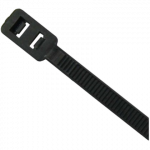
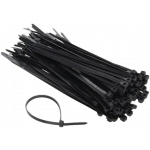

















In the truck workshop and trailer building environment, securing and bundling cables is a routine task that demands the right materials. Cable ties are among the most frequently used fastening components in the commercial vehicle sector, applied during the construction of new trailers as well as during maintenance and repair of existing HGV electrical installations. Selecting the correct type depends on the bundle diameter, the routing conditions and the mechanical demands of the application.
When wiring a trailer or semi-trailer chassis, cables of widely varying diameters need to be organised and secured along the frame. Narrow, short cable ties in the 100 mm length range and 2.45 to 2.6 mm width are used for compact cable runs along chassis sections, junction boxes and light clusters at the rear of a trailer. Their small footprint makes them well suited for confined routing paths and for bundling signal cables that supply rear lights and marker lights on HGV trailers.
For medium-sized cable bundles, such as those running from the front wall of a trailer to the light bar or brake wiring points, cable ties between 150 and 200 mm in length and 3.5 mm in width are the practical choice. This combination accommodates multiple cables without the band being unnecessarily wide for the available space on the chassis rail. In the trailer building sector these dimensions are routinely applied for fixed cable routes along longitudinal frame members.
Heavier-duty applications, such as combining hydraulic hoses with electrical cables on a tipper trailer or a low-loader, require wider and longer cable ties. Ties of 4.6 mm width and lengths between 200 and 270 mm are standard for these situations. They hold larger bundle diameters without cutting into the cables or hoses, a risk that narrower ties can pose when mixed materials are bundled together. For the heaviest bundles, such as large cable runs along the pipe rail of a refrigerated trailer or the sides of a tanker semi-trailer, ties of 7.5 to 7.8 mm width and lengths up to 540 mm are used. These provide the clamping force required to hold heavy bundles in place under the vibration and shock loads generated by a moving vehicle on public roads.
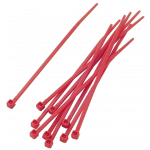
Colour-coded cable ties serve a specific purpose in the truck workshop and among trailer builders working with layered, multi-circuit wiring systems. By using ties in red, blue, yellow and green, individual circuits and systems are visually separated from one another. This simplifies inspection during periodic maintenance, speeds up fault finding and reduces the risk of errors when modifications are made to an existing installation. In a trailer equipped with multiple lighting circuits, marker lighting and additional electrical components such as tail lift controls or refrigeration units, colour coding is a practical tool for the workshop technician.
The accessory holder, supplied empty, supports an organised workflow in the truck workshop. By storing cable ties of different sizes in separate, labelled holders mounted on a tool trolley or wall panel, the technician always has the right size immediately available. This eliminates searching during vehicle work and contributes to a more efficient process on the workshop floor.
In the day-to-day practice of the truck workshop, trailer builder and HGV operator with an in-house maintenance facility, cable ties are a functional part of the electrical installation rather than a disposable item. They determine whether a cable route is neat, safe and durable. Dekoff supplies cable ties in the dimensions and versions that match the practical requirements of professional coachbuilders, semi-trailer specialists and transport companies running their own workshop.