

Pipe clamps
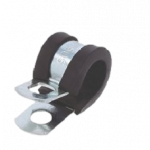
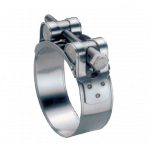
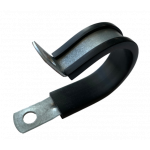
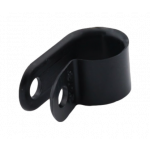
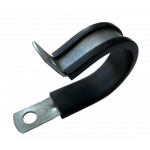
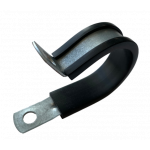
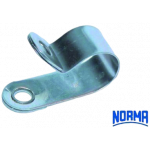
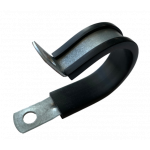
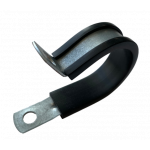
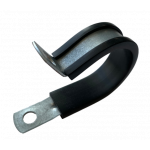
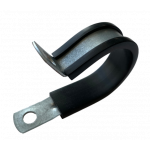
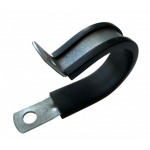
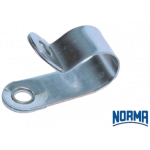
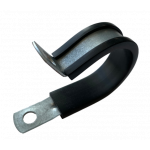
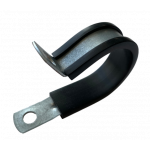
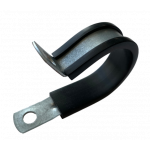
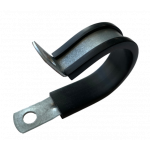
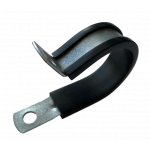
In the daily operations of a truck workshop or trailer manufacturing environment, the secure and orderly routing of cables, hoses and pipes is a fundamental requirement. Cable clamps are the component that makes this possible. They hold electrical wiring, hydraulic hoses and pneumatic lines in a fixed position relative to the chassis, bodywork or frame of a trailer or HGV, preventing movement caused by vibration, mechanical stress or external forces.
When constructing or refurbishing a trailer, lines are routed across tens of metres along frames, crossmembers and side rails. At every fastening point, a clamp is needed to keep the line securely in place under the constant vibration and load that a working vehicle generates. Cable clamps are available in a wide range of diameters, from small sizes for thin wire bundles to larger sizes for hydraulic hoses or cooling water pipes. In a professional truck workshop, several sizes are typically used on the same job, depending on the diameter of the line and its position on the vehicle.
The material of the cable clamp has a direct bearing on its durability and suitability for a given application. Plastic clamps with a metal core or fixing insert are lightweight and resistant to corrosion, making them well suited to locations where weight is a consideration or where exposure to water and cleaning agents is frequent. Galvanised steel clamps provide robust fastening for heavier lines and are widely used on HGV chassis and in trailer construction where mechanical strength is the priority. Stainless steel versions are intended for conditions where corrosion resistance is essential, such as on trailers operating in coastal or salt-affected environments or exposed to aggressive cleaning chemicals.
The method of attachment is another factor that influences the choice of clamp. Some clamps are bolted directly into the frame, others are clipped into a pre-installed bracket or mounting rail. In trailer construction, clamps are often installed in rows along the side rails or longitudinal beams, keeping lines neatly bundled and protected over the full length of the trailer. The spacing between fastening points determines the amount of tension on the line and the degree to which vibrations are absorbed before they reach the line itself.
For bodybuilders and vehicle body manufacturers fitting superstructures to HGV chassis, the routing of cables and hoses is a technical discipline in which cable clamps play a structuring role. The superstructure typically incorporates electrical connections for lighting, refrigeration or hydraulic systems, and all those lines must be fixed in a way that ensures both the function and the service life of the installation. In that context, clamps are selected on the basis of line diameter, the material of the mounting surface and the environmental conditions to which the fastening will be exposed.
Dekoff's range of cable clamps includes products from brands such as ABA and Norma, available in a wide variety of diameters and material grades. Both plastic and steel versions are stocked, as well as stainless steel variants for demanding environments. The clamps are supplied in professional pack sizes suited to the throughput of workshops and production facilities that regularly process larger quantities.
In practical terms within the truck and trailer sector, cable clamps are used in new trailer builds, the refurbishment of existing vehicles and the addition of new installations to HGV chassis. A technician in a truck workshop relies on these clamps for every job that involves laying cables or hoses, whether for a straightforward lighting installation or a complex hydraulic superstructure. Having the right size and material available at the point of assembly determines the standard and longevity of the finished installation.