

Pin terminals
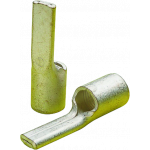
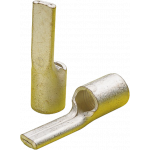
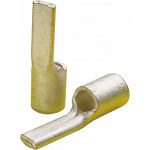
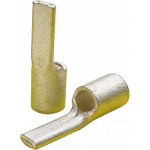
In the day-to-day operations of a truck workshop or trailer assembly environment, a clean and mechanically stable cable termination is a fundamental technical requirement. Wire ferrules, also referred to as conductor end sleeves, are used to consolidate the individual strands of a flexible conductor into a single solid termination point that can be inserted directly into a terminal block, switch or connection point. Without this type of end treatment, loose strands can spread out, cause short circuits or work free over time due to vibration. In an environment where HGV vehicles and trailers are subject to constant mechanical stress during operation, this is a genuine risk that professional electricians and fitters must address.
Wire ferrules are applied across a wide range of connection points in the truck and trailer sector. These include the electrical wiring of trailer lighting systems, ABS control modules, relay and distribution boards in enclosures, refrigeration unit cabling on refrigerated and freezer trailers, and the connection of sensors and junction modules. In all these applications, cables are terminated at terminal blocks where a stable and reliable contact point is essential. The ferrule is crimped onto the stripped conductor and provides a solid, corrosion-resistant termination that maintains its integrity even after prolonged exposure to moisture, vibration and temperature fluctuation typical of the transport environment.
Selecting the correct cross-section is critical to achieving a reliable connection. In a truck workshop, the most commonly used ferrule sizes are 10mm², 16mm², 35mm² and 50mm². Smaller sizes are suited to control circuits and signal cables, while larger cross-sections of 35 and 50mm² are used for main supply connections, earth terminations and power cables for heavy consumers. A 50mm² ferrule, for example, is used when terminating heavy power cables at distribution boards or for connections within the power distribution of a trailer equipped with hydraulic systems or lift axles.
The uninsulated version of the wire ferrule is the most widely used type in trailer construction and the HGV segment when connections are made to terminal blocks with multiple adjacent rails, or where insulation is guaranteed by the terminal block itself. The uninsulated ferrule also allows visual inspection of the connection after crimping, which is practical during quality checks or maintenance in a workshop setting. This type is also suited to applications where the ferrule, once crimped, is inserted into a specific cover or adjustable clamp that does not accommodate an insulated sleeve.
For fitters working in trailer or repair workshops, applying wire ferrules is a standard step when assembling cable harnesses or connecting individual conductors to DIN rail-mounted terminals. Correct crimping requires appropriate tooling and the right pressure setting, but once correctly applied, the ferrule provides a reliable and durable contact point that maintains its integrity under prolonged operational load. The ferrules are compact and straightforward to process, supporting an efficient workflow on the workshop floor.
In the truck and trailer sector, wire ferrules are used wherever flexible conductors are connected to fixed terminal connections. From the electrical installation of a new trailer to the refurbishment of an existing cable run on a tractor unit, the wire ferrule forms the interface between the flexible cable and the fixed connection point. Dekoff supplies wire ferrules in standard cross-sections for professional use in the truck workshop, trailer construction and by bodybuilders and HGV specialists who work with electrical installations on a daily basis.