

Speaker cable
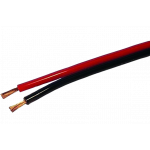
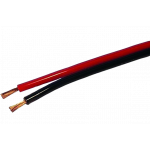
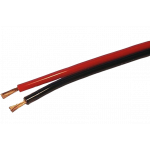
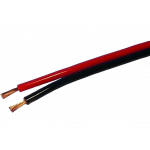
In the truck workshop and across the trailer and HGV sector, audio installations are increasingly integrated as a standard part of vehicle fit-outs. Whether it concerns a truck cab equipped with an amplifier and loudspeakers, or a trailer fitted with an intercom or public address system, the selection of the correct speaker cable is decisive for stable and low-loss signal transmission.
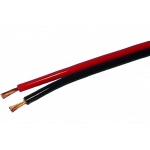
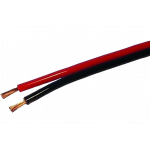
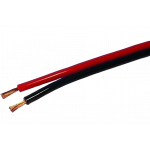
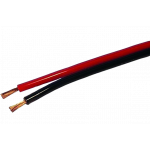
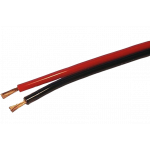
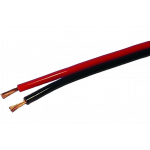
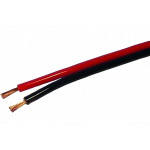
Speaker cable is an unbalanced, two-conductor cable that forms the connection between amplifier and loudspeaker. The two conductors carry the audio signal and together ensure that power is transferred as efficiently as possible from source to speaker. The red and black colour coding applied as standard to most versions makes it immediately possible to connect the polarity correctly. In environments where multiple connections are made simultaneously, such as during the finishing of a truck cab interior or the installation of a public address system on a trailer, this colour coding prevents polarity errors that would negatively affect sound quality.
The cross-sectional area of the conductors plays a central role in choosing the right cable. A smaller cross-section such as 2x0.35 mm² or 2x0.5 mm² is sufficient for low to medium power levels and for short cable runs, such as a speaker connection directly behind the dashboard of an HGV. As cable lengths increase or power requirements grow, the ohmic resistance of the cable rises, resulting in measurable signal loss. For longer runs within a truck cab, or for installations where multiple speakers are connected in series or parallel, a cross-section of 2x0.75 mm² or 2x1.5 mm² is more appropriate. For professional sound installations with higher power levels, such as in event vehicles or special bodywork on trailers, cross-sections of 2x2.5 mm² or 2x4 mm² offer the lowest possible resistance per metre and therefore the least power loss across the full cable length.
Delivery on a reel, available across many versions in this range, offers a clear practical advantage over loose coils. When working in the truck workshop or on the floor of a trailer builder, cable can be unwound in a controlled manner without kinking, tangling or permanent deformation of the conductors. Kinks in the cable can damage the conductive core and undesirably increase the resistance of the connection, which translates into an audible deterioration in sound reproduction. Reels of 50 or 100 metres suit workshops that regularly carry out multiple installations and prefer to cut cable to the required length on-site.
Within trailer construction and bodybuilding, speaker cables are also used in vehicles with fixed working environments, such as refrigerated trailers with internal communication systems, or special bodywork on trailers equipped with public address systems. In all these applications, the flexibility of the cable and the mechanical properties of the sheath are co-determining factors for the service life of the installation. A cable that must regularly flex with moving structural components or that is routed past sharp edges benefits from a supple conductor construction with sufficient protective covering.
In the practical context of the truck and trailer sector, speaker cable is typically used for the installation of audio systems in truck cabs, the laying of public address or communication systems in specialist vehicle bodywork, and the equipping of working vehicles on trailers with sound installations. The availability in multiple cross-sections, combined with practical reel delivery, makes it possible to carry out both simple connections and more extensive installations with the correct cable specification. For the trailer builder or technician in the truck workshop, this means that a suitable cable specification is available for every situation, without compromising signal quality or ease of installation.