

Battery booster terminals
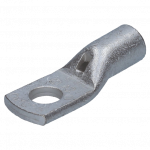
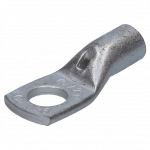
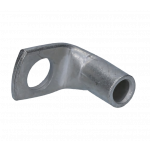


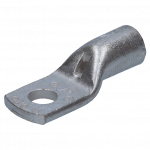
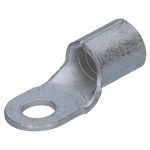
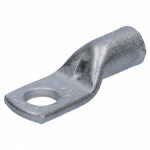
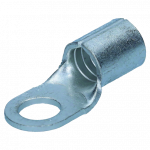
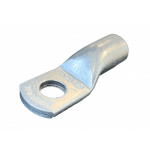
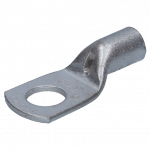
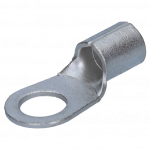
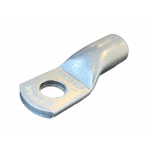
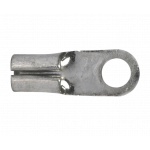
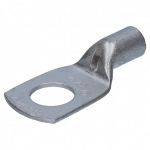
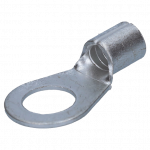
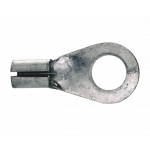
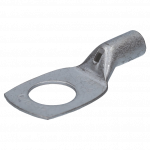
In the electrical installation of trucks and trailers, cable lugs play a critical role at every connection point. Whether connecting a heavy-gauge cable to a battery terminal, a starter motor or a power distribution block, every joint must be mechanically secure and electrically reliable. The technical foundation for this in professional vehicle electrical work is provided by the DIN 46211 standard.
DIN 46211 is the recognised German industrial standard for insulated cable lugs and ferrules. It defines dimensions, material requirements and electrical performance characteristics, ensuring that compliant cable lugs meet the minimum technical requirements for use in heavy-duty electrical systems. In the truck and trailer sector, where cable cross-sections from 10 mm² to 70 mm² are common in starter and charging circuits, compliance with DIN 46211 is a technical requirement rather than a formality.
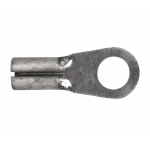
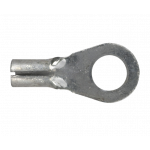
The ring terminal is the most widely used type of cable lug in heavy goods vehicle electrics. A starter lug truck application connects large-section cable conductors directly to the fixing bolt of a battery, starter motor or chassis earth point. Bolt hole sizes are available in M6, M8, M10 and M12 to match the specific fixing points of the vehicle or trailer. A ring terminal truck M8 M10 configuration is frequently used in the electrical connections of semi-trailers and drawbar combinations, where reliable joints under variable load and temperature are essential.
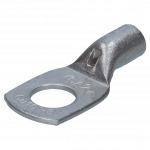
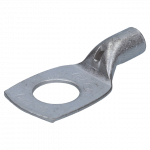
Alongside the conventional ring terminal, the tubular cable lug HGV application is widely used where the connection is made through a cylindrical sleeve that fully encloses the cable conductor. This construction provides a gas-tight joint that is less susceptible to oxidation, which is particularly relevant in environments where condensation, moisture and corrosive gases are present, such as engine bays and undercarriage installations.
Cable lugs in the crimp-and-solder configuration combine two connection techniques in a single component. The integrated heat-shrink sleeve mechanically secures the cable and seals out moisture, while the solder ring creates a gas-tight electrical connection upon heating. This makes them suitable for installations where a crimping tool is unavailable or where additional security is required. The solder-only version is suited to the workshop professional who has the correct equipment at hand for controlled installation.
The selection of the correct cable cross-section and bolt size directly determines the electrical performance of the joint. Cross-sections of 10 mm² and 16 mm² are used for control circuits and auxiliary loads, while 25 mm², 35 mm², 50 mm² and 70 mm² are found in starter and charging circuits carrying high current. For connections to battery terminals and starter motors in heavier truck configurations, the 50 mm² and 70 mm² variants with M10 bolt holes are standard. The M12 version is used on larger power distribution terminals and heavy battery clamps where the bolt size of the connection point demands it.
DIN 46211 and DIN 46235 are the two principal norms governing cable lug specification in the truck and trailer sector. DIN 46235 applies to uninsulated cable lugs for use with compressed conductors, making it relevant for connections not located in an insulated environment. Both standards provide interoperability and technical assurance when selecting components.
For truck workshops, trailer builders and bodywork manufacturers, a well-stocked range of cable lugs is a daily operational requirement. Whether connecting a starter lug truck on a replaced starter motor, wiring the battery installation on a new semi-trailer or carrying out repair work on a vehicle's electrical system, the correct cable lug in the right size and version determines the quality and service life of the connection. With standardised dimensions, appropriate conductor cross-sections and bolt size options matched to real-world workshop practice, this range forms the technical backbone of any professional electrical installation in heavy transport.