

Deutsch connectors
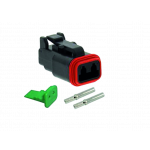
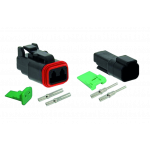
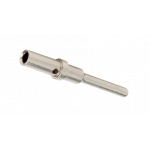
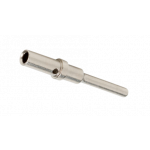
Deutsch connectors are among the most widely used electrical connectors in heavy vehicle technology. For HGV workshops, trailer builders and body builders working on wiring systems in demanding environments, the DT series and DTM series represent a proven technical standard that combines reliable performance with strict requirements for sealing and vibration resistance.
The DT series is engineered for applications where the connection must withstand prolonged exposure to moisture, dust, temperature variation and mechanical vibration. This makes the Deutsch connector truck application a logical choice, as vehicle wiring is continuously subjected to road vibration, spray water and changing climatic conditions. The housings are manufactured from glass-fibre reinforced thermoplastic, providing high dimensional stability and resistance to chemicals and fuels. The locking mechanisms integrated into the DT series prevent unintentional disconnection, even under sustained vibration such as that generated in moving vehicle combinations on motorways and rough terrain.
With regard to ingress protection, Deutsch connectors comply with IP67, meaning the mated connector is fully dust-tight and resistant to temporary immersion in water up to one metre deep for thirty minutes. Certain variants meet IP68, which covers prolonged submersion at greater depth without affecting the integrity of the electrical connection. In the context of Deutsch connector trailer applications, this is relevant for wiring routed low on the chassis or inside chassis sections, where water accumulation during pressure washing or wet road conditions presents a real operational risk.
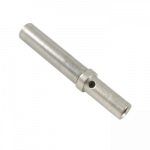
Contacts within the DT series are available for a range of conductor cross-sections, from small signal wire sizes of 0.5 mm² through to heavier gauges for power circuits with higher current demands. After crimping, the contacts form a gas-tight seal around the conductor core, preventing oxidation and increased contact resistance over time. This characteristic is particularly valued in professional trailer construction, where wiring assemblies on semi-trailers may remain in service for many years without intermediate disassembly, regardless of the weather conditions encountered.
The DTM series is a more compact variant within the Deutsch system, applied where available space is restricted but the same requirements for sealing and mechanical robustness apply. Both DTM and DT configurations incorporate integrated peripheral seals in the connector housing that work in conjunction with individual wire seals at each contact cavity. This multi-stage sealing approach maintains the rated IP protection level even when cavities within a multi-pin housing are unused or partially populated.
In Deutsch plug HGV applications, complete connector sets allow both the plug and socket halves to be assembled simultaneously. This is practical when installing new wiring in a vehicle or trailer, as both ends of a harness can be fitted with the correct contacts and housings in a single working session. Using matched sets reduces the risk of selecting incompatible components and allows systematic harness construction in line with vehicle specifications.
For workshops maintaining or repairing truck and trailer combinations, the availability of individual contacts by conductor size is equally important. Repairs to existing wiring often require replacement of individual contacts without full disassembly of the connector. Both pin and socket contacts are available per conductor section, allowing the technician to select the appropriate variant for the circuit being serviced.
In daily truck and trailer workshop practice, Deutsch connectors are used in sensor and actuator circuits, trailer lighting systems, hydraulic control wiring, PTO harnesses and general chassis wiring. The combination of IP67 or IP68 sealing, gas-tight crimped contacts and a mechanically locked connection system makes this connector range suitable for all mounting positions in the vehicle, from the coupling point to deep within the chassis, regardless of operating conditions or the maintenance cycle of the vehicle.