

Battery terminal cover
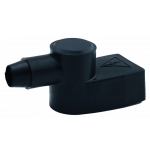
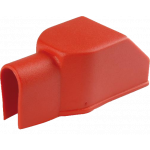
In the daily operations of a truck workshop and trailer manufacturing environment, battery connections represent one of the most critical points in any vehicle electrical system. Heavy goods vehicles and trailers operate with battery systems that carry substantial currents, with cable cross-sections typically ranging between 35mm² and 70mm². At connections of this size, covering the battery terminal clamp is not a matter of preference but a fundamental requirement. A battery terminal cover provides effective insulating protection against accidental contact with live terminal clamps and connection points.
In trailer construction and bodybuilding, vehicles are built or converted with battery installations that must remain accessible for maintenance and inspection. In these situations, where multiple technicians may be working on the same vehicle or where a trailer is temporarily disconnected from its towing unit, the risk of accidental contact with battery terminals is genuine. A protective cover for the terminal clamp significantly reduces this risk by fitting closely around the clamp connection, preventing tools, wiring or other conductive materials from making unintended contact with the terminal.
For trailer specialists and bodybuilders working with vehicles that use large cable connections, selecting the correct cover depends on the cable diameter. Covers suitable for 35mm² to 70mm² cable cross-sections are compatible with the terminal clamps commonly used on heavy commercial vehicles. The material of the cover, typically a robust plastic or rubber compound, provides durable insulating properties and is resistant to the conditions characteristic of the HGV sector: temperature fluctuations, moisture, vibration and exposure to oils and cleaning agents.
Transport companies with in-house workshops and wholesale distributors supplying professional electrical components to the sector treat battery terminal covers as a standard part of a correct and safe battery installation. When replacing battery cables or connecting new batteries in a truck or trailer, these covers are either supplied as standard or ordered separately to complete the installation properly. Omitting a terminal cover on a clamp connection in a commercial vehicle is not acceptable in professional workshop environments, both from a safety perspective and from the standpoint of delivering a correctly finished installation.
Battery terminal covers also play a role in preventing corrosion at the terminal connection itself. By shielding the clamp from moisture and contamination, the electrical connection remains reliable for longer. On a trailer that is regularly exposed to road salt, mud and weather conditions, this is a practical advantage that contributes to the longer service life of the entire battery installation.
In the practical context of the truck and trailer sector, battery terminal covers are used during new trailer builds, during electrical system overhauls on existing HGVs and when replacing batteries in commercial transport vehicles. Technicians in the truck workshop order these covers alongside terminal clamps and battery cables as part of a complete installation. Proper coverage of battery connections is a basic requirement in professional electrical work within trailer manufacturing and contributes directly to the safety of both the vehicle and the working technician.