

Cable terminals
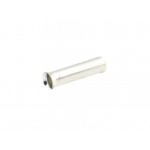
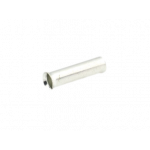
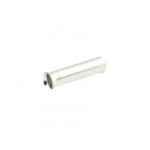
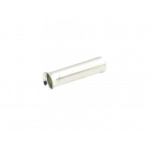
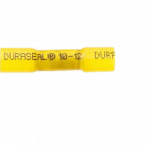
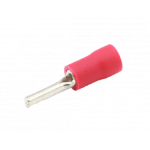
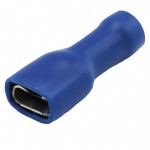
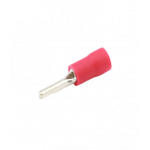
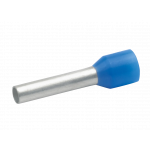
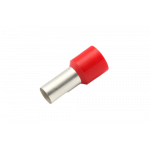
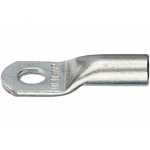
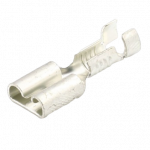
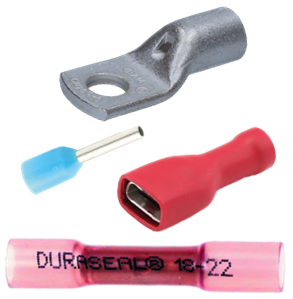
In the electrical installation of trucks, semi-trailers and trailers, every connection determines the reliability of the entire system. Cable lugs are at the heart of this. They form the transition between a cable conductor and a connection point, and that transition must be mechanically strong, electrically stable and capable of withstanding the demanding conditions that come with daily use in road transport. Vibration, temperature fluctuations, moisture and chemical exposure place high demands on every connection, and it all starts with choosing the right cable lug truck component.
Dekoff supplies a comprehensive range of cable lugs specifically compiled for the professional market. Customers include truck workshops, trailer manufacturers, body builders, coachbuilders, semi-trailer specialists, wholesalers and transport companies with their own workshop. For all these application areas, quality and compliance with standards are not optional but essential. The products in this category are therefore aligned with the relevant industrial standards widely used in the truck and trailer sector.
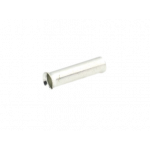
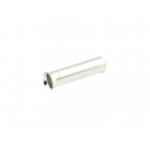
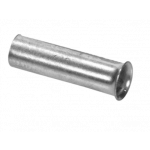
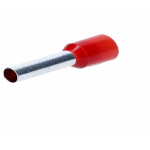
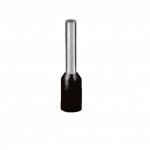
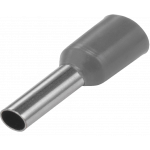
The DIN 46228 standard applies to wire ferrules, also known as adereindhulzen in Dutch or end sleeves. This standard sets requirements for the dimensions, material and design of wire ferrules used to bundle finely stranded conductors into a stable, solid end. In the wiring of semi-trailers and trailers, this type of termination is indispensable, precisely because loose conductor strands can fray under vibration or movement, potentially causing short circuits or connection failures. The wire ferrule trailer component in accordance with DIN 46228 ensures that the connection retains its shape and remains stable in the terminal blocks, switches and connection points for which it is intended.
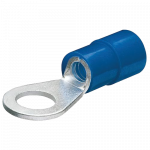
The DIN 46211 standard governs the specifications for insulated cable lugs and starter lugs. This standard describes the mechanical and electrical properties a cable lug must possess to be suitable for use in vehicle installations. Starter lug truck connections in accordance with DIN 46211 are particularly relevant for the heavy cable cross-sections used in battery cables, starter connections and power distribution systems. The closed ring shape of the starter lug offers a structural advantage over open fork types: the cable end remains mechanically locked in place, even if a fastening bolt becomes slightly loose.
Within the range, several subcategories each have their own application profile. Insulated cable lugs feature colour-coded insulating sleeves that enable quick visual identification of the correct cross-section. They are used daily in the wiring of lighting, sensors, relays and control electronics on trucks and semi-trailers. Uninsulated cable lugs offer greater flexibility in applications where insulation is applied afterwards or where space or heat requirements demand it.
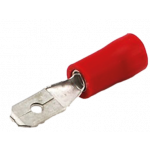
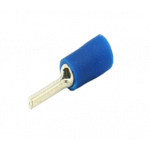
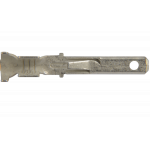
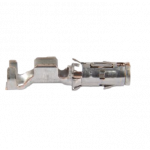
Ring cable lugs are particularly well suited to secured connections on battery terminals, clamping rails and power connections due to their closed ring shape. Fork cable lugs offer an open connection that is quick to fit and remove, making them ideal for maintenance-sensitive connection points. Round pin cable lugs are used for connections on connectors and terminal blocks with cylindrical pins, while flat blade cable lugs and flat blade sleeves form the standard connection for a wide range of electrical components in vehicle installations.
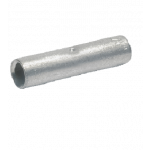
Splice connectors are also an essential part of this category. They are used to join two cable ends together without welding. In versions with an integrated heat-shrink sleeve and adhesive layer, such as waterproof Duraseal-type products, a hermetically sealed connection is formed after heating that resists moisture, dirt and corrosion. This makes them particularly suitable for use in the undercarriage of semi-trailers and in outdoor applications on trailers.
In addition to cable lugs and splice connectors, the range also includes extraction tools for removing connectors and solder-crimp tubes with which electricians can make reliable connections without a soldering iron. The complete offering is aimed at the professional truck and trailer workshop that carries out crimp cable lug HGV installations at a scalable and high-quality level.
Anyone looking for the right type for a specific cross-section, a particular fastening method or an application with high environmental demands will always find a suitable solution within this range that meets applicable standards and the practical needs of the daily workshop.