

Uitdrukgereedschap
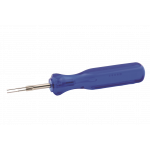
In a professional truck workshop or trailer assembly environment, the ability to remove electrical connectors and contact pins without causing damage is a routine requirement. Whether a wiring loom is being repaired, reworked or reused, individual pins and socket housings often need to be released from their connectors without harming the surrounding components. Connector release tools are specifically designed for this purpose and are an essential part of the toolkit in any workshop handling HGV electrical systems.
This category of tools is hand-operated and features precisely shaped tips that fit into the locking apertures of connector housings. By applying targeted pressure to the retaining clip or spring inside the housing, the contact pin is released and can be withdrawn without force. This approach eliminates the kind of damage that inevitably results from improvised methods using screwdrivers or other unsuitable tools. In trailer construction and HGV wiring, such damage is costly, since a compromised connector housing often renders the entire connector assembly unusable.
When working on trailers and heavy goods vehicles, technicians routinely encounter multi-pin connectors used in lighting systems, ABS circuits, tail lift controls, hydraulic interfaces and sensor wiring. All of these applications use standardised connector types in which contact pins are mechanically retained within the housing. Without the correct release tool, disengaging this retention without causing damage is practically impossible. The variety of connector types found across different vehicle makes and ages means that a well-equipped truck workshop needs a range of tool sizes and tip profiles to cover the full spectrum of connectors encountered in daily work.
The use of release tools is not confined to repair situations. During new trailer builds, wiring harnesses are assembled and terminated, and it is sometimes necessary to reposition a pin or correct an incorrect insertion before the connector is sealed or secured. At this stage of trailer construction, precision is critical, since a misplaced pin that causes an intermittent fault later in the vehicle's service life is difficult to locate and time-consuming to rectify.
The ergonomic design of professional connector release tools is important in a busy HGV workshop context. The tool must sit comfortably in the hand, allow accurate placement within the connector body, and provide enough rigidity to compress the retaining spring without slipping. These characteristics reduce the risk of error and allow technicians to work efficiently, even in confined spaces or awkward positions that are common when working underneath trailers or inside wiring ducts.
For workshops servicing vehicles from multiple manufacturers and production years, maintaining a varied selection of release tools is advisable. Some contact pins require a thin, needle-like tip, while others need a flat or forked profile to engage the retaining feature correctly. Matching the tool geometry to the connector type is what ensures a clean release every time.
In the daily practice of the truck workshop, trailer construction and HGV maintenance, connector release tools occupy a foundational role alongside crimping pliers, wire strippers and testing equipment. Having the right sizes and profiles readily available means technicians can reuse connectors where appropriate, respond quickly to electrical faults and build wiring assemblies correctly from the outset, avoiding unnecessary material waste and rework.