

Booster cable set
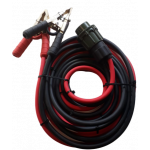
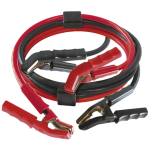
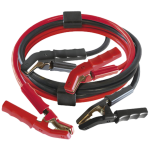
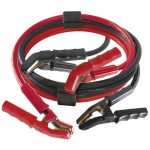
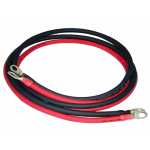
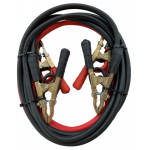
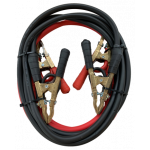
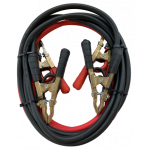
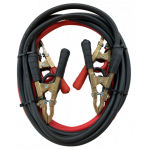
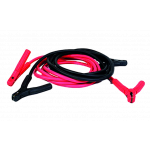
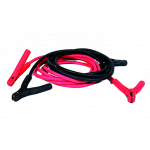
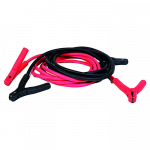
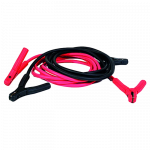
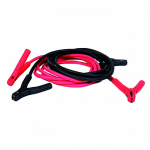
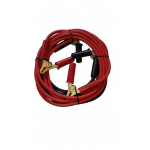
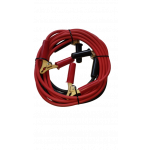
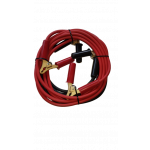
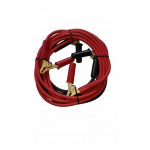
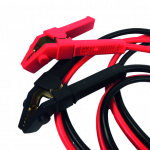
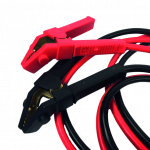
A flat battery on a truck or trailer is not an edge case in the transport industry. It is a practical challenge that mechanics, trailer builders and bodywork specialists encounter on a regular basis. Whether it concerns a vehicle that has been standing idle over the weekend, a truck with a discharged battery bank, or a trailer in need of a boost before it can leave the yard, having the right jump start kit truck at hand determines how quickly operations can continue. Choosing the correct set depends on several technical parameters that are directly related to how and where the kit will be used.
The most fundamental specification of a booster cable set HGV is the cable cross-section, expressed in mm². A 35mm² cable is suited for lighter applications such as passenger cars and light commercial vehicles operating on a 12V system. As soon as heavy trucks, buses or trailers with 24V electrical systems are involved, a 50mm² cross-section becomes necessary. The larger diameter reduces electrical resistance, which means that during the high current peaks generated when cranking a large diesel engine, less energy is lost as heat and more is available for the actual start. Using an undersized cable in these situations not only risks a failed start but also the risk of overheating the cable itself.
Cable length is the second practical factor. A starter cable kit 24V with a length of 3.5 metres is manageable and suitable for workshop use where vehicles can be positioned close together. However, in outdoor situations, or when the battery compartments of two vehicles cannot easily be aligned, a cable length of 5 or even 10 metres provides significantly more operational flexibility. On trucks where the battery boxes are mounted on the side of the chassis at height, or behind access panels, additional cable length prevents forced and potentially unsafe positioning of the assisting vehicle.
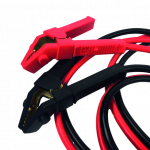
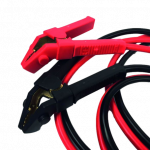
The design of the clamps is a technical detail that carries real practical weight. Half-insulated clamps have exposed metal jaws for direct electrical contact, with the handle section partially covered in insulating material. This is a widely used configuration that offers basic user protection. Fully insulated clamps take this further, with both the outer housing and the inner jaw surfaces covered in insulation material, leaving only the actual contact point exposed. This significantly reduces the risk of accidental sparks or short circuit damage when the clamps inadvertently touch metal components or bodywork near the battery. For professional workshop environments, fully insulated clamps are the more controlled option.
Angled clamps represent a further refinement relevant to heavy vehicle applications. On trucks and trailers, battery terminals are frequently located in confined spaces surrounded by wiring harnesses, hoses or structural elements. A straight clamp can be difficult or impossible to position correctly in such situations. An angled clamp allows the mechanic to approach the terminal from a different direction without applying excessive force, which reduces both the effort required and the risk of accidental contact with surrounding components.
Some jump start kits are equipped with a NATO plug featuring a locking ring in addition to standard clamps. This configuration is used for vehicles fitted with a standardised NATO connector, providing a vibration-resistant mechanical connection that stays in place during use. This is a specific application relevant to specialised fleet operators working with vehicles equipped with this type of connector.
For trailer applications specifically, the combination of a 50mm² cable cross-section and a length of 5 or 10 metres is the most practical choice. Trailers often have their own battery system for powering lighting and electrical components. When that battery is discharged after a period of inactivity or due to a fault in the charging circuit, jump starting from a tractor unit or workshop vehicle is required. The distance between the power source and the trailer battery can easily exceed what a 3.5 metre cable can bridge, making longer sets a more reliable choice for this use case.
For truck workshops, trailer builders and bodywork specialists, maintaining a range of cable sets covering different diameters and lengths is a sound approach. A 35mm² set handles lighter and 12V applications, while a 50mm² set with 5 or 10 metres of cable covers the demands of heavy commercial vehicles on a daily basis. Dekoff supplies jump start kits configured for the specific requirements of the truck and trailer sector, with cable quality, clamp insulation type and practical usability as the defining criteria.