

Multicore truck/trailer cable

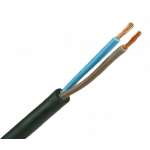
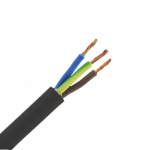
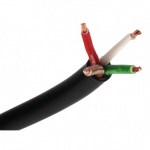
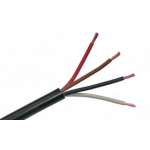
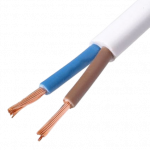
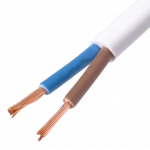
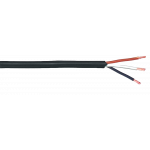
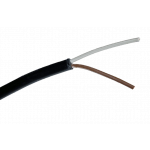
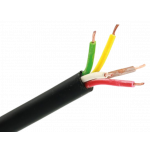

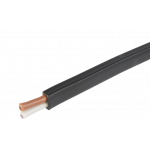
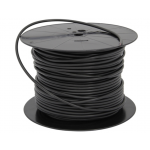

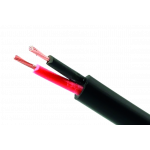



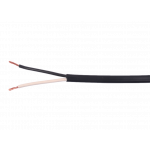
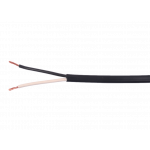
Trailer cable is a fundamental component of every electrical installation on a semi-trailer or trailer. The selection of the correct cable type depends on the construction standard, the sheath composition, the conductor cross-section and the applicable regulations for the specific application. Dekoff supplies trailer cable in the FLYY and FLRYY constructions, both intended for professional use in the truck and trailer industry.
The designation FLYY refers to a specific construction standard for vehicle cables featuring PVC insulation per conductor and a PVC outer sheath. The fine-stranded copper conductors provide sufficient flexibility during installation and in service, while the PVC sheath resists oil, moisture and the mechanical stresses that are characteristic of transport and logistics environments. FLYY trailer cable is available in both flat and round configurations, depending on the installation requirements. Flat cable is suited for routing along flat surfaces such as floor beams or under bodywork. The round version is used where the cable is routed through cable ties, trunking or conduit, and a uniform outer diameter is required.
The FLRYY construction offers an additional degree of flexibility. The finer stranding of the copper conductors makes this cable more suitable for applications involving greater mechanical movement, such as movable bodywork sections or connections that are regularly disconnected and reconnected. Furthermore, the FLRYY construction complies with ADR regulations governing the transport of dangerous goods. This makes FLRYY trailer cable the appropriate choice when a semi-trailer or trailer is used for ADR transport. The ADR framework imposes specific requirements on the electrical components of vehicles carrying hazardous loads, including cable construction and sheath quality. Using a cable that does not meet these requirements is not permitted on ADR-certified vehicles.
Beyond cable construction, the conductor cross-section plays a decisive role in the application. Trailer cable with a cross-section of 0.75 mm² is used for signal circuits and lighting connections where current load remains limited. A cross-section of 1.5 mm² provides greater current capacity and is applied in standard lighting installations on semi-trailers, where multiple rear lights, side marker lamps and contour lighting are fed through the same circuit. For higher current loads, such as the supply of electric brakes or winches, a cross-section of 2.5 mm² is standard. Selecting the correct cross-section is not only a matter of safety, but also of regulatory compliance: an undersized conductor causes voltage drop, heat build-up and, over time, insulation damage.
Conductor colours in trailer cable follow defined conventions. European colour coding for low-voltage wiring uses brown for the live conductor and blue for neutral in two-conductor connections. In DC applications on trailers and caravans, the combination of red and black is also used, with red indicating the positive pole and black the negative. The black and white combination appears in specific signal applications. In three-conductor cables, brown, blue and black are applied in accordance with standard European practice. Correct colour coding is not only a matter of installation convenience, but is also a requirement during inspections and maintenance, where a technician must quickly and accurately identify the function of individual conductors.
ISO 11446 governs the electrical connection between tractor and trailer, specifically for the 13-pin socket that is standard across Europe for semi-trailers and heavy trailers. The 13-core semi-trailer cable is the physical connection that supports the functions of this socket. A correctly installed 13-core system compliant with ISO 11446 covers functions including indicators, brake lights, rear lights, number plate lighting and auxiliary power supply. The cable construction must withstand the dynamic conditions of a moving vehicle: vibration, temperature fluctuations and exposure to road contamination.
In the daily practice of trailer builders, bodybuilders and truck workshops, trailer cable is one of the most frequently consumed materials. Whether the task involves new construction of a refrigerated semi-trailer, the refurbishment of a curtainsider, or the modification of the lighting on a tipper trailer: without the correct trailer cable in the appropriate standard and cross-section, a reliable and durable installation cannot be achieved. Dekoff supplies FLYY and FLRYY trailer cable on reels and drums, in a range of conductor cross-sections and colour combinations, tailored to the requirements of professional users in the truck and trailer sector.