

Control cable
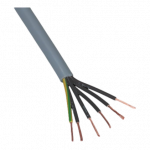
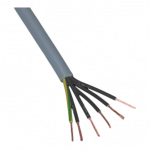
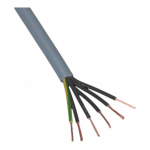
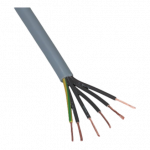
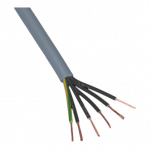
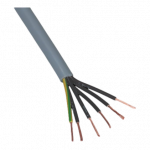
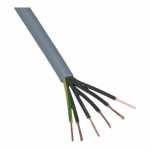
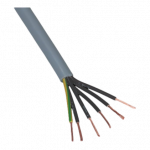
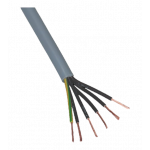
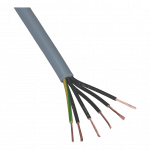
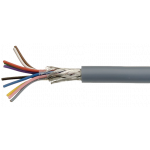
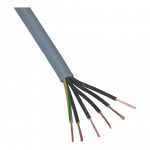
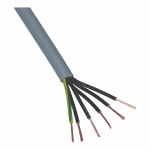
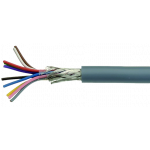
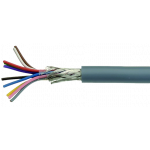
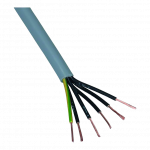
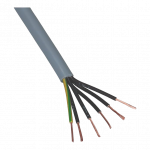
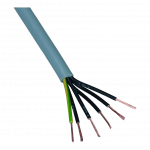
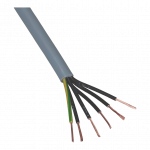
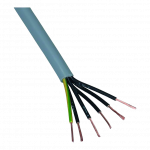
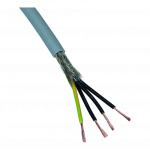
Control cables are a fundamental component of the electrical infrastructure in trailer and truck construction. This product category covers cables designed for wiring control circuits, switch cabinets and automation installations where multiple signal circuits are combined within a single sheath. The two most common cable types in this category are the YSLY and the LIYY, each with a distinct construction and area of application, but both rated for use in low-voltage installations up to 300/500V.
The YSLY control cable is an unscreened, flexible multi-core construction with finely stranded copper conductors, PVC insulation per core and a flexible PVC outer sheath. The YSLY designation refers to a standardised construction adapted for applications where the cable is subject to mechanical movement or repeated flexing. This makes the YSLY suited for use in dynamic installation environments, such as those encountered during the construction of trailers and semi-trailers. The cores are black and printed with individual numbering, making the wiring traceable in switch cabinets with multiple connection points. This is of direct practical relevance for trailer builders and body builders working with complex control schematics for lighting, hydraulics and loading systems.
The LIYY cable construction differs from the YSLY in that it uses finely stranded conductors with a smaller cross-section, such as 0.14 mm². The symmetrical construction of the LIYY provides better resistance to electromagnetic interference, which is advantageous in environments where electronic control components are sensitive to interference. The LIYY is applied in situations where signal quality and electromagnetic compatibility require additional attention, also within 300/500V installations.
Within the YSLY range, multiple core counts are available, from 2 to 18 cores, and several conductor cross-sections from 0.5 mm² to 1.5 mm². The choice of the correct type depends on the number of control circuits to be wired and the current load per core. For signal circuits and sensor connections, a cross-section of 0.5 mm² is generally sufficient, while for longer cable runs or circuits with higher power requirements, a cross-section of 0.75 mm², 1 mm² or 1.5 mm² is appropriate. Voltage drop across the cable length is a determining factor in selection, particularly when control cables are routed along the full length of a semi-trailer or along the chassis of a truck.
Control wiring for trailers requires specific properties in terms of flexibility and mechanical load capacity. In practice, control cables in trailers are exposed to vibration, temperature fluctuations and mechanical stress resulting from the continuous movement of the vehicle. The PVC outer sheath of both YSLY and LIYY provides adequate protection against these environmental influences within the application limits defined by the 300/500V rating. For applications requiring electromagnetic screening, the LIYCY variant is available, constructed with a braided copper shield around the conductor group.
The numbered core construction of the multi-core control cable is a technical advantage that directly contributes to installation quality. In switch cabinets and junction boxes of trailers and semi-trailers, where dozens of connection points are positioned side by side, core numbering significantly reduces the risk of wiring errors. This reduces the time required for verification and correction after installation, which in a professional workshop environment is directly reflected in project throughput time.
In the truck and trailer sector, control cables are used in the wiring of PLC-controlled systems on semi-trailers, in the control of electric sliding floors, refrigeration units and hydraulic systems, and in the internal wiring of switch cabinets at body builders and coachwork manufacturers. The availability of multiple core counts and cross-sections within the same cable construction makes it possible to select the correct cable per project based on the number of circuits, the current load and the required flexibility. For transport companies with their own workshop and for specialised semi-trailer specialists, a correctly dimensioned control cable is a prerequisite for a reliable and maintenance-friendly electrical installation.