

ABS cable
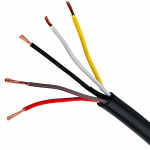
The electrical wiring of an ABS braking system on a semi-trailer or trailer must meet strict technical requirements. The cable connecting sensors, modulators and control units is exposed to mechanical stress, temperature fluctuations, moisture and the chemical environment typical of a vehicle undercarriage. In the truck and trailer sector, only cable types that comply with the applicable technical standards for vehicle wiring are used for this purpose.
The FLRYY standard is the defining cable specification for ABS wiring in the vehicle industry. An FLRYY ABS cable consists of one or more insulated conductors enclosed by an additional outer sheath. This double insulation layer makes the cable type robust against mechanical damage, such as abrasion caused by contact with the chassis or moving components. The outer sheath also provides protection against oils, greases and other fluids present in the workshop and on the road. The FLRYY construction is specifically designed for use in motor vehicles and trailers, where the cable is subjected to vibration, bending stress and varying ambient temperatures.
A typical FLRYY ABS wiring semi-trailer contains multiple conductors with different cross-sections and colour coding. Conductors with a cross-section of 4 mm² are used for current-carrying connections, while conductors of 1.5 mm² are used for signal connections. The colour coding of the conductors, such as red, brown, black, white and yellow, follows the standard conventions within vehicle electrics and makes the installation clear and error-resistant. Correct colour coding is not only a practical benefit for the technician but also a requirement for the traceability and maintainability of the wiring throughout the vehicle's service life.
In addition to the FLRYY standard, ISO 7638 plays a central role in the wiring of braking systems on trailers and semi-trailers. This international standard describes the electrical connection between the towing vehicle and the trailer for ABS and EBS braking systems. ISO 7638 defines the connector, pin assignment and electrical specifications of the connection, ensuring interoperability between vehicles from different manufacturers. Cables used for brake system cable HGV and trailer applications must be compatible with the requirements set by ISO 7638 with regard to conductor arrangement and electrical properties.
DIN 74545 is also relevant as a supplementary standard for vehicle cables in the automotive industry. This standard establishes requirements for the construction and quality of insulation materials used in vehicle cables. For brake system cables on trailers, this is significant because the cable must meet specifications not only during installation but throughout its entire service life. The material requirements set by DIN 74545 contribute to the reliability of ABS cable trailer wiring under the demanding conditions of transport operations.
When selecting an ABS cable trailer, it is important that both the conductor configuration and the cable type match the specific requirements of the braking system and the connector used. A brake system cable HGV that does not comply with the applicable standard can lead to malfunctions in the ABS system, with direct consequences for the safety of the vehicle and compliance with the legal requirements for heavy goods vehicles on European roads.
In the day-to-day practice of trailer manufacturers, body builders and vehicle workshops, the ABS cable is a component that is carefully selected and installed during every new build or overhaul. The cable typically runs along the chassis of the semi-trailer, from the ISO 7638 connector at the coupling to the individual wheel modulators and sensors. During installation, attention is paid to routing, securing and protecting the cable against mechanical damage. Professional trailer builders and workshops working on FLRYY ABS wiring semi-trailer applications rely on cables that demonstrably comply with the FLRYY standard and the requirements of ISO 7638, ensuring the finished result meets the technical and legal requirements for heavy vehicles in European transport.