

Contacts
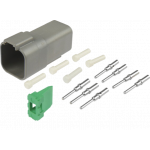
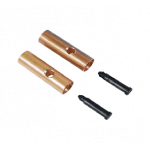
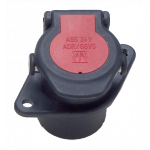
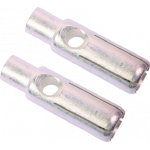
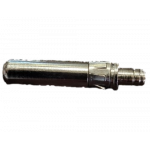
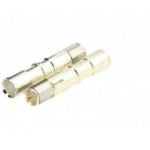
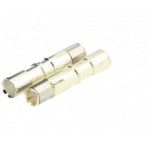
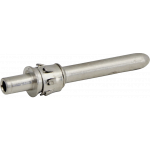
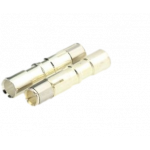
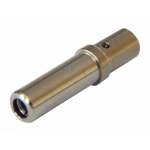
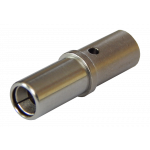
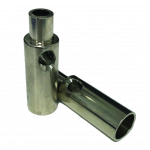
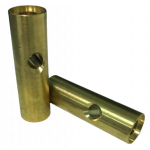

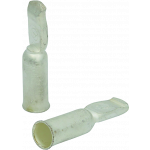
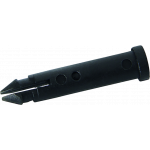
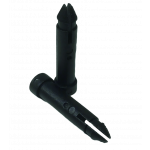
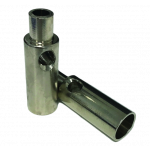
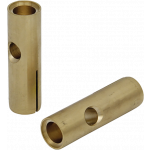
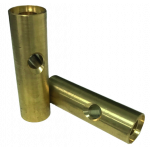
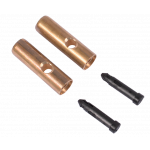
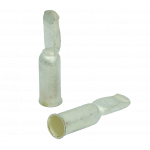
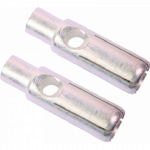
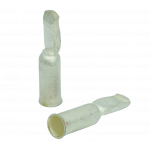
In any electrical connection on a heavy vehicle combination, the contact itself is the component that determines whether current or signal is reliably transferred. Whether it concerns the coupling between a tractor unit and a trailer, the connection of an EBS system on a semi-trailer, or the power supply of an auxiliary system on a heavy goods vehicle body, the contact pin or contact socket is the critical interface. In the truck workshop and during trailer construction, contacts are among the most frequently replaced components. Their condition directly determines the quality of the electrical connection.
For NATO connectors, contacts are available in versions rated for large cable cross-sections. These contacts are designed to withstand the high mechanical stresses and vibration that occur in heavy industrial and military coupling applications. The contact pins used in NATO connectors must combine high current carrying capacity with a secure locking mechanism within the connector housing. This ensures the connection remains stable under the dynamic loads typical of HGV operation.
For ABS and EBS applications, purpose-designed contact sets are used in multi-pole EBS connectors. On a trailer or semi-trailer, these contacts form the interface between the electronic braking system of the tractor unit and the brake control electronics on the trailer. Contact pins with a barbed retention design are commonly used in these connectors to prevent the contact from working loose due to vibration during driving. In the truck workshop, EBS contacts are a standard repair component, since frequent coupling and uncoupling leads to wear on both the contact surface and the retention mechanism.
ISOBUS ECU contacts are intended for use in the data communication bus standardised under ISO 11783. This system establishes communication between a tractor or prime mover and attached implements or trailers equipped with ECU-controlled systems. Contacts for ISOBUS connectors are available in 2.5mm² and 10mm² variants. Their design prioritises signal integrity and reliable mechanical retention within the ECU connector housing.
Rema contacts form a separate group within the range. Rema connectors are widely used in the heavy trailer and transport industry for 24V power connections, particularly in applications involving traction battery systems, refrigerated trailers and hydraulically operated trailer equipment. Contacts for Rema connectors are available in 35mm² and 50mm² cross-sections, and in three connection methods: soldered, crimped, and clamped. Each method has its own advantages. Soldered contacts offer a permanent, low-resistance connection with good resistance to corrosion. Crimped contacts can be assembled without open flame and produce a mechanically compact, vibration-resistant joint. Clamped contacts allow faster assembly and, in some configurations, disassembly and reuse.
Contact pins and contact sockets must always be matched in terms of dimensions and cross-section to ensure correct engagement and low contact resistance. In high-current Rema applications, such as the power supply of refrigeration units or hydraulic systems on a semi-trailer, using the correct cross-section is a technical requirement. Undersized contacts generate heat and increased resistance, leading to premature failure and unplanned downtime.
Multi-pole contact sets, such as those used in 15-pole connector housings, are used in trailer and body-building applications where multiple circuits, including lighting, sensor signals and control currents, are routed through a single connector. This approach is common in specialised semi-trailer and heavy goods vehicle body construction where compact wiring solutions are required.
In the daily routine of the truck workshop and HGV trailer construction, having the right contacts immediately available is essential to minimise vehicle downtime. Whether replacing a worn EBS contact on a trailer, assembling a new high-current Rema connection on a lowloader, or restoring a NATO connector after field use, the contact is the component at the heart of every reliable electrical connection.