

AMP connectors
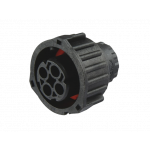
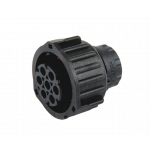
AMP connectors are a fundamental component in the wiring of trucks, trailers and semi-trailers across the European transport sector. In any professional truck workshop or trailer manufacturing environment, the need for reliable, mechanically stable electrical connections is constant. AMP connectors answer that need by providing a structured system of housings and contacts that keeps cable lugs securely in place, regardless of the operating conditions a vehicle encounters on the road.
The AMP connector system, originally developed by TE Connectivity, has established itself as one of the most widely used connection systems in HGV and trailer applications. The housings are manufactured from robust plastic materials that withstand the mechanical and environmental stresses typical of commercial vehicle installations. Vibration, moisture, temperature fluctuations and the physical strain of loading operations are all factors that an electrical connection in a trailer must be able to handle over the long term.
In trailer manufacturing, AMP connectors are used wherever multiple conductors need to be brought together in an organised and protected way. Rear light clusters, side marker lights, ABS sensor wiring and the electrical interface between tractor and semi-trailer are all areas where these housings play a practical role. Cable harnesses on a trailer run over considerable distances and are subjected to constant movement. The housings ensure that contacts remain correctly positioned and that no unintended connections occur due to play or mechanical displacement.
For the technician working in a truck workshop, the appeal of AMP connectors lies in their straightforward application. Housings are designed for specific cable lug types and pole configurations, which reduces the risk of incorrect assembly. A 4-pole housing for uninsulated cable lugs consolidates four conductors into a compact protective enclosure, which is particularly useful in areas of the vehicle where space is limited but where multiple circuits still need to be terminated. The housing keeps the cable lugs secure, shields them from contact with metal structural elements and contributes to a clean installation that is easy to inspect or modify at a later stage.
The 7-pole version serves more complex connection points, such as locations in a HGV or trailer installation where lighting circuits, sensor lines and control cables converge. By bringing all these conductors into a single housing, the installer avoids the use of additional distribution blocks or unsupported connections. The play-free retention of the cable lugs within the housing ensures long-term stability, which is essential in a sector where vehicles operate under demanding conditions for extended periods.
For wholesalers and trailer builders working on production runs, the consistency offered by AMP connectors is a practical advantage. When multiple trailers or semi-trailers are wired to the same specification, standardised housings and contacts ensure uniformity throughout the installation. This simplifies both production and subsequent maintenance. A technician familiar with the system can work efficiently on any vehicle in a fleet without needing to interpret unfamiliar connection methods.
In the day-to-day reality of the truck workshop and trailer industry, AMP connectors provide a dependable means of organising uninsulated cable lug connections into structured, protected housings. Whether the task involves repairing a single circuit on a semi-trailer or completing a full wiring installation on a new build, these housings offer the mechanical reliability and organisational clarity that HGV and trailer applications demand.