

High Voltage cable
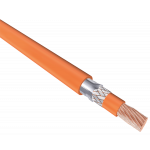
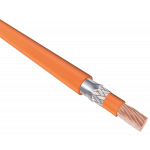
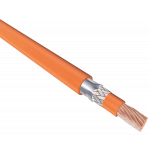
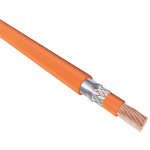
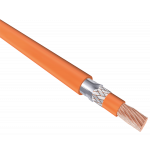
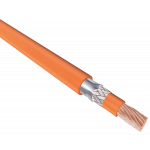
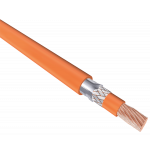
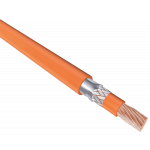
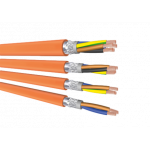
The transition to electric and hybrid drivetrains in heavy commercial vehicles demands a fundamentally different approach to on-board wiring. Conventional low-voltage vehicle cabling is not designed to handle the electrical loads, voltage levels or safety requirements of high voltage traction systems. HV cable electric truck applications require cables that are specifically engineered and certified for operating voltages up to 600V AC or 900V DC. The FHLR2GCB2G cable type represents the established standard for high voltage wiring in electric and hybrid vehicles within the automotive and commercial vehicle industry, and forms the core of the Dekoff high voltage cable range for the truck and trailer sector.
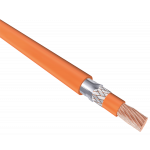
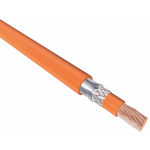
The designation FHLR2GCB2G defines a specific cable construction intended for demanding high voltage applications in vehicles. The conductor is built from fine-stranded tinned copper wires, a configuration that delivers both flexibility and corrosion resistance. In commercial vehicle installations, cables are routed along vehicle frames, secured in cable trays and exposed to continuous vibration during operation. Fine-stranded conductors withstand repeated flexing and mechanical stress significantly better than solid conductors, without compromising electrical conductivity. This is a fundamental requirement when working on HV wiring in electric trucks and hybrid vehicles.
The insulation of FHLR2GCB2G cable uses XLPE, a cross-linked polyethylene compound that maintains its mechanical and dielectric properties at elevated operating temperatures. XLPE insulation is substantially more thermally stable than standard PVC insulation and remains reliable in environments near the drivetrain, motor compartment or battery enclosure of an electric heavy goods vehicle. In addition, XLPE insulation resists the chemicals commonly encountered in commercial vehicle workshops and during vehicle operation, including hydraulic fluids, coolants and brake fluids. The combination of thermal endurance and chemical resistance makes XLPE insulation the specified material for high voltage vehicle cable constructions.
A defining feature of the FHLR2GCB2G construction is its integrated EMC shielding. High voltage traction systems generate significant electromagnetic fields through the inverter, electric motor and charging electronics. Without proper shielding, these fields can interfere with the low-voltage control systems, CAN-bus communication and sensor signals that operate in parallel within the same vehicle. The EMC shielding incorporated in the FHLR2GCB2G cable prevents electromagnetic emissions from affecting adjacent systems and protects signal wiring routed near the high voltage cable runs. This shielding function is not only operationally necessary but is also addressed in the type approval requirements for electric and hybrid commercial vehicles.
The LV216 standard governs the qualification and type approval of high voltage cables for use in electric and hybrid vehicles. LV216 sets requirements for dielectric strength, sheath tensile properties, flex cycle endurance and performance at extreme temperatures. High voltage cable EV HGV installations that involve regularly flexed cable sections, such as at cable entry points or connections to moving drivetrain components, require cables that demonstrably comply with these cycle endurance criteria. The products in this category are specified in accordance with LV216, providing the technical assurance expected by professional vehicle builders and workshop technicians.
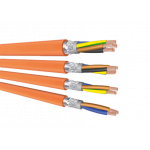
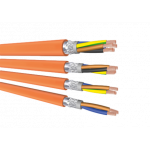
The range includes single-core and multi-core configurations in conductor cross-sections from 4mm² up to 120mm². The appropriate cross-section depends on the required current-carrying capacity, cable length and acceptable voltage drop in the circuit. Main connections between the battery pack and inverter in an electric truck typically call for the larger cross-sections: 50mm², 70mm², 95mm² or 120mm². Secondary circuits, auxiliary consumer connections or shorter sections within the HV network are served by smaller cross-sections such as 4mm², 6mm², 10mm² or 16mm². Multi-core variants, including two-core and four-core configurations, allow multiple circuits to be combined within a single cable sheath, reducing space requirements in the vehicle and simplifying cable management.
HV wiring hybrid vehicle applications present a particular challenge because the high voltage system and the conventional 24V electrical system must coexist within the same vehicle architecture. Hybrid trucks have a more complex wiring structure than fully electric vehicles, and the FHLR2GCB2G cable is suited to both vehicle types due to its combined insulation, shielding and mechanical durability properties.
For trailer builders, body builders and commercial vehicle workshops, working with high voltage cable requires procedures and materials that differ from conventional vehicle electrics. These cables are supplied by the linear metre, enabling precise lengths to be sourced for specific installation or repair projects. This is directly relevant for workshops involved in the wiring of electric tractor units, hybrid distribution trucks or electrified semi-trailers with refrigeration units or hydraulic systems operating on a high voltage bus. Dekoff supplies FHLR2GCB2G cable as a B2B supplier to professional customers who make technically informed decisions based on applicable standards, construction requirements and the specific demands of each application.