

Electrical coils without plugs
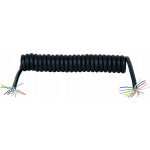

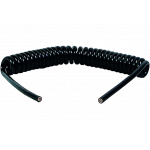
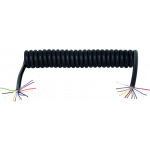

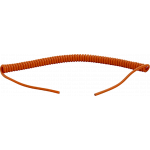

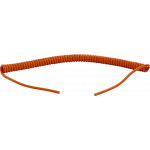
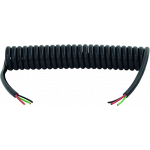
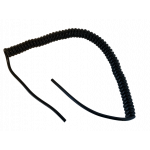
In the truck workshop and trailer assembly sector, selecting the correct spiral cable is a technical decision that directly affects the reliability of the electrical installation. Spiral cables supplied without plugs offer a clear advantage in this context: the installer or trailer builder determines which connector or termination method is applied, matched to the exact requirements of the vehicle or trailer. This makes these cables suitable for custom installations where standard pre-terminated cables are not appropriate.
The most common application in trailer and HGV assembly is the connection between the tractor unit and the semi-trailer or drawbar trailer. Seven-core spiral cables are widely used for this purpose, with a combination of cores of different cross-sections to handle both lighting and additional power circuits within a single cable body. The coiled construction absorbs the movement between tractor and trailer during driving, including cornering and changes in height, without the cable losing its mechanical properties or suffering damage.
For more demanding applications on the trailer itself, spiral cables with a higher core count are available. A configuration with twelve cores of 1.5 mm² combined with three cores of 2.5 mm² is intended for installations where part of the circuits requires a higher current capacity. The larger cross-section cores are assigned to electrical consumers with greater current demand, such as hydraulic systems or heavy lighting on the trailer. By combining both core types in one spiral cable, the cable routing between tractor and trailer remains organised and compact.
A distinct category within spiral cables without plugs covers ADR-compliant versions. Vehicles used for the transport of dangerous goods are subject to additional requirements regarding their electrical installation. A 13-core spiral cable meeting ADR/VLG requirements is specifically developed for those applications. In the truck workshop it is essential to select the correct cable for vehicles operating under this regulation, as using an unsuitable cable creates risks for both safety and vehicle inspection.
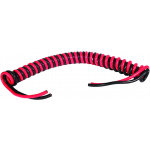
Beyond multi-core signal and lighting cables, heavy-duty spiral cables are available for power supply applications. Cables with a conductor cross-section of 35 mm², available both as single cables and in a twin configuration where the positive and negative leads are twisted together, are used where high currents need to be transferred. Examples include battery system connections, charging the trailer battery, or supplying large electrical consumers. The twin configuration in red and black has the practical advantage that positive and negative always remain together, simplifying cable routing and reducing the risk of connection errors.
For lighter applications, such as sensor circuits, signal lines or smaller consumers on the HGV trailer, spiral cables with three, four or five cores of smaller cross-sections are available. A cable with five cores of 0.75 mm² or four cores of 1 mm² allows the installer to run multiple independent circuits through a single cable without unnecessarily increasing cable weight or diameter. This is relevant where space is limited or where the cable must follow existing cable trays and fixing points.
EBS applications deserve specific attention in the truck workshop. The electronic braking system of a trailer places specific demands on the cabling, and a spiral cable with the correct core composition for EBS, combining heavier supply cores with lighter signal cores, is the designated solution. Using a generic cable for EBS connections is technically unsuitable and can cause malfunctions in the braking system.
All spiral cables in this category are supplied without fitted plugs. This is a deliberate choice for use in professional trailer assembly and the truck workshop, where the termination method depends on the vehicle type, the bodywork or the existing installation on the trailer. The installer fits the required connectors themselves, enabling custom work and the reuse of existing connection points. With a standard working length of 3.5 metres, these cables are matched to the typical distances involved in coupling a tractor unit to a semi-trailer or drawbar trailer.