

Relays

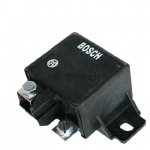
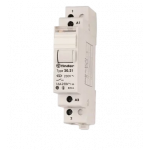
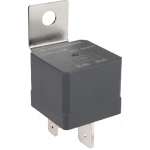
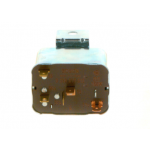
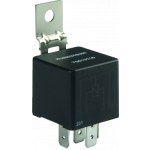
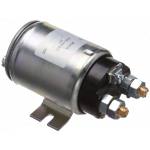
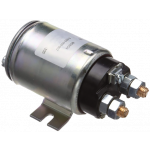
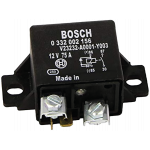
In the day-to-day operations of a truck workshop, relays are essential switching components. Whether the task involves activating lighting systems, switching starter motors or protecting battery circuits on a trailer, the relay provides the connection between a low-power control signal and a high-power load circuit. Without this component, workshop technicians would need to switch heavy current consumers directly through control elements, which is both impractical and technically inappropriate in HGV applications.
In trailer construction and the assembly of semi-trailer systems, relays are used across a range of voltage levels. Vehicles operating on a 24V electrical system, such as tractor units and heavy trailers, require relays with a corresponding coil voltage. Examples include normally-open relays with a switching capacity of 70A on a T8 base for driving heavy consumers, or 24V starter relays with a switching current of 40A, specifically designed for the reliable energisation of starter motors. In 12V applications, such as light trailers and vans, more compact micro relays with switching currents of 20 to 25A are used, where the limited installation space within a relay housing or cable duct favours a smaller footprint.
The difference between a 4-pin and a 5-pin relay is directly relevant in trailer construction. A 4-pin relay provides a normally-open contact that closes when the coil is energised, which is sufficient for most single switching circuits. A 5-pin version adds a normally-closed contact, making it possible to interrupt one circuit while simultaneously closing another. In the truck workshop, this type is used for changeover switching applications such as lighting controls, alarm systems or pump controls on a trailer.
Changeover relays with an 87/87b designation are designed to control two separate circuits from a single relay. This makes them suitable for applications where two different consumers must alternate depending on the switching status. In trailer and semi-trailer construction, this is applied in systems where a safety function requires that activating one circuit automatically deactivates another.
A specific application in the truck and trailer sector is the isolating relay. This type of relay is used to electrically separate two battery circuits, ensuring that a secondary battery for onboard consumers cannot discharge the starter battery of the towing vehicle. This is a common challenge in HGV combinations where refrigeration units, hydraulic systems or tail lifts are powered by a separate battery pack. The isolating relay switches automatically based on the charge voltage, providing reliable isolation without manual intervention from the workshop technician.
Brands such as Bosch, Hella and Finder supply relays designed for automotive and vehicle electronics applications where reliability under varying conditions is essential. Vibration, temperature fluctuations and moisture ingress are everyday realities on a moving semi-trailer or in an externally mounted relay box on a truck. The mechanical construction of these relays, including the coil winding and contact configuration, is tailored accordingly. Models with AgNi contact alloys offer additional resistance to contact wear under high switching cycle loads, which in the truck workshop is a decisive factor when selecting a specific relay type.
In the practice of trailer construction and semi-trailer assembly, relays are selected based on the available board voltage, the maximum switching current of the consumer to be controlled, the required switching configuration and the available installation space. A normally-open relay on a T8 base fits into standard relay holders common in European trailers and truck bodywork, simplifying interchangeability and stock management in the workshop. Whether the application involves a simple switching task or a more complex multi-circuit system, selecting the correct relay type directly determines the reliability and service life of the electrical installation in heavy transport.