

Reels
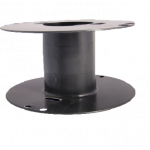





In the daily operations of a truck workshop or trailer assembly facility, cable management is a critical but often overlooked element of an efficient working environment. Electrical cables are used in large quantities when wiring trailers, refrigeration units, lighting systems, ABS systems and electrical connection lines. Without a structured storage method, cables become tangled, cable sheaths get damaged from being dragged across rough surfaces, or loosely coiled cables create trip hazards on the workshop floor. A cable reel addresses these issues in a straightforward and effective way.
A cable reel is fundamentally a spool onto which cable is wound tightly and in a controlled manner. This ensures that after use, the cable is immediately ready for deployment without any preparation. In a professional trailer assembly environment where multiple cable types are in use simultaneously, this translates to a direct saving of time. The technician does not need to spend time untangling cables or checking for kinks and sheath damage that occurred during unorganised storage. Cables that are wound without respecting the correct bending radius risk internal conductor fracture or insulation damage, causing installation faults that are difficult to trace.
For on-site use, such as when installing electrical systems on a trailer or connecting external equipment to an HGV, a compact reel allows the cable to be carried easily and dispensed in a controlled way. The reel prevents the cable from dragging across the floor or getting caught in a vehicle undercarriage during installation. This is particularly relevant when working on heavy goods vehicles where space is limited and orderly working conditions contribute to a fault-free installation.
The range includes cable reels in various sizes and configurations, matched to different cable diameters and types. A smaller reel with compact outer dimensions is suited for thin control cable or narrow multicore cable that needs to be stored in confined spaces, such as in the toolbox of a maintenance vehicle. Larger versions are intended for heavier cable, such as multicore power cable or thick rubber hose used in the trailer industry for pneumatic and electrical connections. The choice of the correct reel depends on the cable diameter, the desired cable length on the spool and the frequency of use.
The construction of a cable reel largely determines its service life in a professional environment. In a truck workshop, reels are regularly moved, sometimes knocked over and exposed to oil, grease and moisture. A robust design with strong flanges and a stable core ensures that the cable remains neatly wound even under these conditions and that the reel itself does not deform. Deformation of the core or flanges can result in the cable no longer dispensing smoothly or becoming damaged during unwinding.
For trailer builders and bodybuilders working with longer cable rolls, reels are also useful as an intermediate step when processing cable. A large roll of cable can be transferred from a bulk spool onto a smaller working reel that is easier to handle or can be suspended at a specific location in the workshop. This makes measuring and cutting cable more accurate and faster.
In the truck and trailer sector, where every component of the electrical installation must be functional and traceable, a correct installation starts with correctly managed materials. Cables stored on a reel are free from mechanical stress, have not deteriorated due to exposure to UV light or floor contamination, and are ready for immediate use. Dekoff offers cable reels in multiple configurations that match the practical needs of the professional truck and trailer technician, from compact models for the service team to larger types for the trailer builder working daily with significant volumes of cable.