

Rubber straps
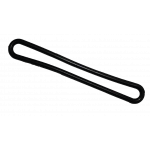
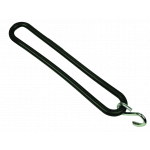
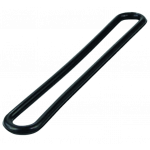
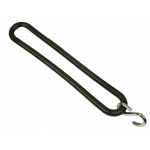
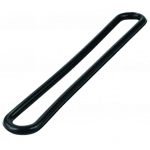


Bungee cords for trailers serve a straightforward but essential function in professional transport: keeping tarpaulins, cargo nets, deck covers and load floor linings firmly in place on trailers, semi-trailers and trucks during transit. In a workshop environment, whether at a trailer builder, a truck garage or a haulier with its own maintenance facility, elastic straps are a daily consumable that needs to be on hand in the right sizes and quantities at all times.
The material quality of an elastic strap for trailer use is not a secondary concern. Rubber that hardens in cold weather or degrades quickly under UV exposure loses its stretch and its holding force precisely when it matters most. Weather-resistant rubber that retains flexibility across a range of temperatures, from cold winter conditions to summer heat, is the standard for professional use in the truck and trailer sector. For operators managing fleets of open trailers or tautliners, the bungee cord is something that needs regular replacement, and availability in larger quantities is a practical necessity.
Length is the primary factor when selecting the right elastic strap for trailer applications. A 20 cm bungee cord is suited to situations where attachment points are close together, such as ring hooks on a flat deck with an already-taut tarpaulin. The 25 cm version provides slightly more reach and works well where a gentle tension arc is needed. The 40 cm variant is intended for larger structures: wide flatbed trailers, lowloaders and trucks where the tarpaulin spans a greater surface area and the elastics need to bridge a longer distance while maintaining consistent tension. Workshops servicing a variety of trailer types benefit from stocking all three lengths.
Diameter adds another dimension to the selection. A thicker elastic strap with a diameter of 25 mm or more delivers significantly greater pulling force and resilience than a thinner cord. This is relevant when securing heavier tarpaulins over large cargo or when industrial transport goods require a firm, sustained elastic tension. For lighter applications, such as covering smaller trailers or protecting loads on single-axle drawbar trailers, a standard-diameter bungee cord is sufficient.
The S-hook bungee trailer configuration is the practical standard in professional settings. A well-formed S-hook connects quickly to spanners, trailer nets, roof rails and any frame with brackets or strips, without tools, even while wearing gloves or working quickly between loads. The symmetrical shape keeps the hook stable under the pulling force of the stretched elastic. S-hooks that are available separately allow worn or damaged hooks to be replaced independently of the rubber band, which reduces waste and running costs in a busy workshop.
The surface treatment of the steel S-hook is a detail with real-world consequences. Trailers and semi-trailers are continuously exposed to road salt, moisture and thermal cycling. A hook that corrodes weakens the attachment and can damage the rubber from the inside out. A protective coating extends the service life of the complete elastic and hook assembly.
In the truck and trailer sector, elastic straps with S-hooks are used at every stage where a cover or net protects the cargo. Body builders fit them as standard closure elements on open superstructures. Trailer manufacturers include them as part of the standard equipment on new semi-trailers. Transport operators with their own workshop keep stock so that drivers always have functional bungee cords available at the start of each run. Choosing the right combination of length, diameter and hook quality directly determines how long the elastic strap remains serviceable and how reliably the load remains covered throughout the journey.